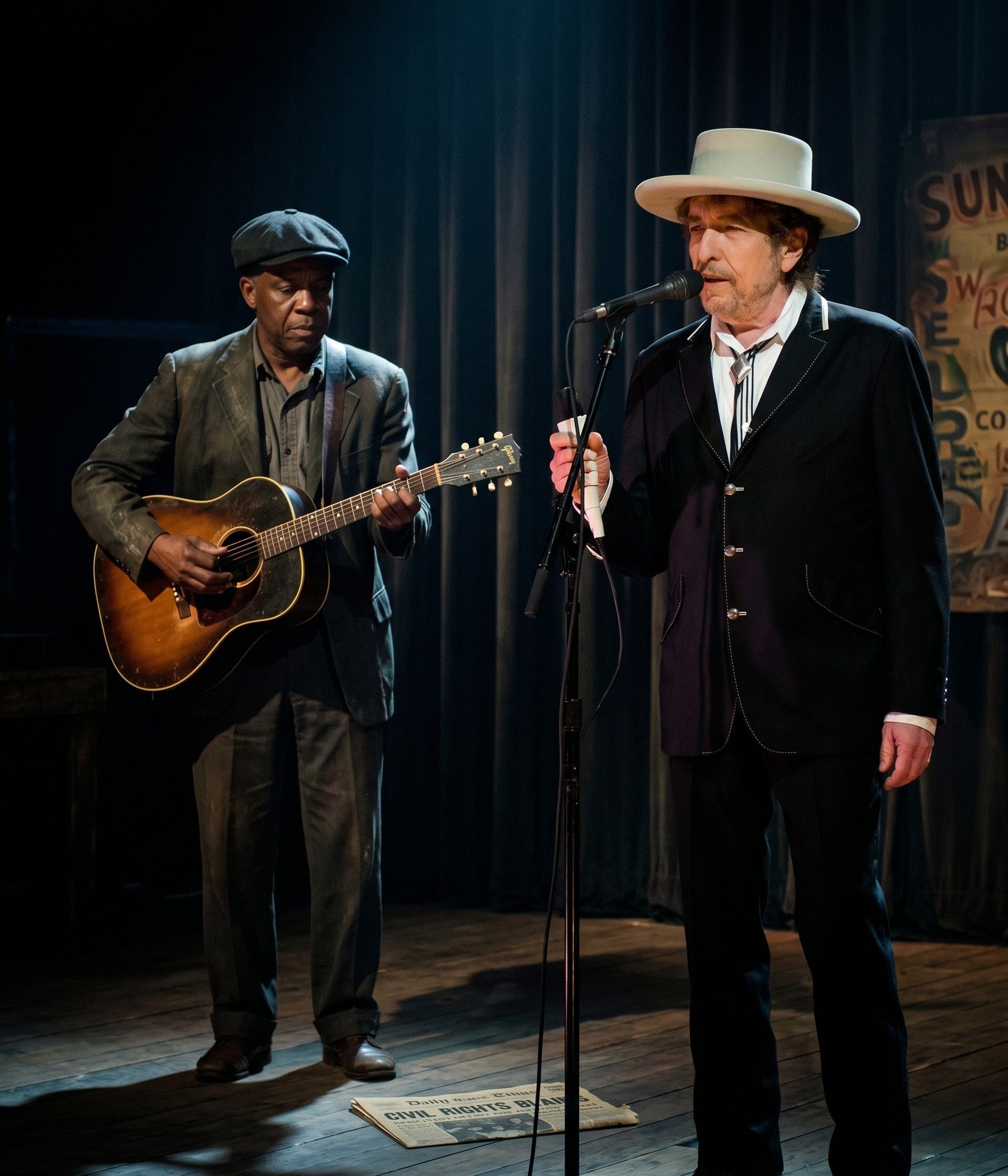
“LISTEN, WHITEY!”: How Bob Dylan And The Music Of Protest Helped Shake America During The Civil Rights Revolution
During the 1960s, the United States stood at the center of one of the most painful and transformative periods in modern American history. Across the country, racial division, segregation, violence, and political unrest created an atmosphere filled with anger, fear, and emotional tension. Streets became battlegrounds for justice. Churches turned into organizing centers for resistance. Young activists risked their safety demanding equality while millions of Americans watched the nation struggle with questions it could no longer avoid.
It was during this explosive era that Bob Dylan emerged as one of the most influential artistic voices connected to the growing movement for social change.
Long before anti-racism movements gained widespread public acceptance, protest music was already carrying messages of resistance into communities across America. Songs became more than entertainment. They became emotional weapons, sources of courage, and symbols of unity for people confronting discrimination and injustice every day.
Music gave the Civil Rights Movement something powerful:
A voice capable of reaching hearts faster than politics alone ever could.
During marches, demonstrations, church gatherings, and mass meetings, songs united crowds through shared emotion and collective purpose. Spirituals, folk music, gospel traditions, and freedom songs helped strengthen activists facing enormous danger. In moments of fear and exhaustion, music reminded people they were not fighting alone.
The phrase “Listen, Whitey!” reflected the growing frustration and urgency felt throughout the movement.
For generations, Black Americans had endured segregation, inequality, violence, and exclusion embedded deeply within American society. By the 1960s, patience was collapsing under the weight of injustice. Activists demanded not only legal reform, but recognition of basic human dignity long denied by political and social systems.
Artists became deeply connected to that cultural transformation.
While some musicians avoided controversial political issues, others openly used their platforms to confront racism and inequality. Among them, Bob Dylan became especially important because his songwriting reached audiences beyond traditional activist circles.
Dylan’s music captured the emotional uncertainty of an America facing moral crisis.
Songs like “Blowin’ in the Wind” asked difficult questions about war, freedom, human suffering, and racial injustice with poetic simplicity that resonated across generations. The lyrics spread rapidly through universities, churches, protest marches, and concert halls because they expressed frustrations many people already felt but struggled to articulate publicly.
For young listeners especially, Dylan’s songs represented moral awakening.
At a time when much of mainstream culture remained cautious about confronting racial injustice directly, protest music challenged audiences to recognize uncomfortable truths about American society. Dylan and other artists helped create an emotional atmosphere where silence became increasingly difficult to defend.
The documentary Soundtrack for a Revolution later revisited that extraordinary historical moment, exploring how music became inseparable from the Civil Rights Movement itself.
Rather than treating songs as background entertainment, the documentary showed how deeply music shaped activism, resistance, and emotional survival during one of America’s most dangerous periods of social conflict. Freedom songs were not symbolic decorations surrounding the movement — they were essential parts of its emotional power.
The film highlighted how ordinary people sang together while facing police violence, imprisonment, intimidation, and public hatred.
Music helped transform fear into solidarity.
In churches across the American South, songs strengthened communities preparing for protests and voter registration campaigns. During marches, music unified demonstrators confronting hostile crowds and violent resistance. Inside prisons and jail cells, activists continued singing even after arrests because the songs reminded them that their struggle carried moral purpose beyond immediate suffering.
Artists connected to the movement therefore became far more than performers.
They became cultural witnesses documenting the emotional reality of America during a period of extraordinary national tension. Folk singers, gospel musicians, jazz performers, and spiritual leaders all contributed to an artistic movement that helped force conversations many political institutions preferred to avoid.
For Dylan, the connection to civil rights activism became one of the defining aspects of his early career.
Although he later resisted being labeled purely as a protest singer, his music undeniably shaped public consciousness during a time when America faced enormous moral pressure to confront racism directly. His performances alongside activists and civil rights leaders reflected a generation of artists increasingly willing to use music as a form of social engagement rather than simple entertainment.
The influence of protest music during that era cannot be separated from the larger cultural transformation taking place across America.
Songs carried emotional truths capable of crossing political, racial, and geographic boundaries in ways speeches sometimes could not. Music humanized suffering, exposed injustice, and inspired empathy among listeners who may never have directly experienced segregation themselves.
That emotional power remains deeply important today.
Modern audiences revisiting documentaries like Soundtrack for a Revolution often feel shocked by how familiar many of the themes still sound. Questions surrounding racial equality, protest, social division, and political resistance continue shaping public conversations decades later.
Yet the story also serves as a reminder of something hopeful:
Art can influence history.
The musicians connected to the Civil Rights Movement helped create emotional momentum that political systems could no longer ignore. Their songs strengthened courage, challenged silence, and gave ordinary people language for expressing pain, hope, and determination during one of America’s darkest chapters.
Today, the legacy of Bob Dylan and the protest music era remains powerful not simply because the songs were historically important, but because they proved that music can become part of something far larger than entertainment.
It can become a force capable of helping change a nation.