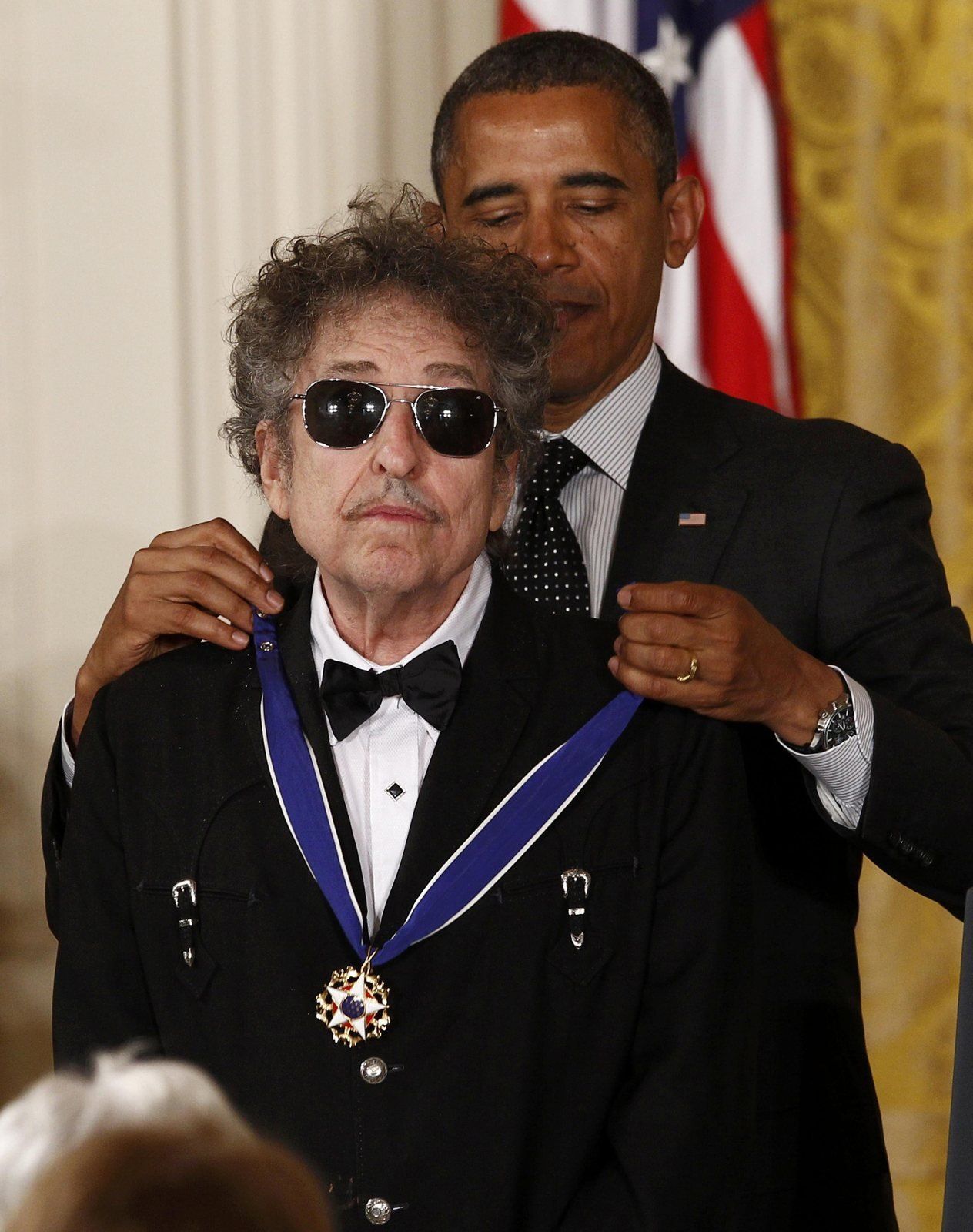
NOBEL PRIZE OUTRAGE: Bob Dylan’s Historic Nobel Victory Triggered Fury, Confusion, And One Of The Most Divisive Debates In Modern Cultural History
When Bob Dylan was awarded the Nobel Prize in Literature in 2016, the announcement instantly shocked the world. Some people celebrated the decision as a revolutionary recognition of songwriting as a legitimate literary art form. Others reacted with disbelief, anger, and open hostility, accusing the Nobel Committee of disrespecting traditional literature by giving its highest literary honor to a rock musician.
Almost overnight, the controversy exploded into a global cultural debate.
For decades, Dylan had already been recognized as one of the most influential lyricists in modern music history. His songs transformed folk and rock music by introducing poetic complexity, political commentary, emotional symbolism, and literary depth rarely seen in popular songwriting before the 1960s. Admirers argued that his words influenced generations with the same emotional power as great novels and poetry.
But critics strongly disagreed.
Many literary scholars and traditionalists questioned whether songwriting should even qualify for literature’s most prestigious award. They argued that novels, essays, and poetry represented entirely different artistic disciplines from popular music. To them, the Nobel Prize symbolized literary excellence rooted in written text rather than performance and celebrity culture.
The backlash intensified dramatically after Dylan himself remained publicly silent for weeks following the announcement.
Fans, journalists, and Nobel officials waited for a clear response, but none came immediately. As days passed without public acknowledgment, confusion turned into frustration. Some observers interpreted Dylan’s silence as indifference, arrogance, or even disrespect toward one of the most prestigious cultural institutions in the world.
The situation quickly became emotionally charged.
Commentators accused Dylan of acting distant and dismissive toward the honor many writers spend their entire lives dreaming about. Critics questioned whether he truly appreciated the significance of the award at all. Headlines across newspapers and television programs described growing tension surrounding the Nobel Committee’s attempts to communicate with the famously private musician.
For some people, Dylan’s silence became more controversial than the award itself.
Calls for boycotts and public criticism spread across cultural discussions, particularly among those who already opposed the decision. Opponents argued that if Dylan did not appear grateful or engaged, then perhaps the Nobel Committee had made a serious mistake by selecting him in the first place.
At the center of the controversy stood one deeply emotional question:
Did a rock musician truly deserve literature’s highest honor?
Supporters of Dylan passionately defended the decision.
They argued that literature has always evolved beyond rigid traditional forms. Oral storytelling, poetry, folk ballads, and song lyrics historically played enormous roles in shaping human culture long before modern literary categories existed. From this perspective, Dylan represented part of a long artistic tradition where words and music combined to communicate emotional and philosophical truth.
Many admirers pointed out that Dylan’s lyrics had already been studied in universities for years.
His songwriting explored politics, spirituality, loneliness, morality, identity, and social conflict with extraordinary poetic complexity. Songs such as “Blowin’ in the Wind” and “Desolation Row” were viewed by supporters not simply as entertainment, but as literary works capable of capturing the emotional atmosphere of entire generations.
To them, the Nobel Prize merely recognized what millions of listeners had believed for decades.
Yet opposition remained fierce.
Some writers openly expressed frustration that novelists, poets, and playwrights devoted their lives to literature only to see the award given to a global music celebrity already surrounded by fame and financial success. Critics feared the decision blurred the boundaries between literary achievement and popular entertainment in ways they considered intellectually dangerous.
The debate revealed something much larger than opinions about Dylan alone.
It exposed a growing cultural divide over how art itself should be defined in the modern world. Could song lyrics stand beside novels and poetry as serious literature? Should literary institutions evolve alongside changing artistic forms, or preserve traditional distinctions between different creative disciplines?
Dylan’s unusual behavior following the award only deepened the mystery surrounding him.
Throughout his career, Bob Dylan often resisted public expectations and avoided conventional celebrity behavior. He rarely explained himself clearly and frequently appeared uncomfortable with institutional recognition or symbolic titles placed upon him. To longtime fans, his silence after the Nobel announcement seemed entirely consistent with his elusive personality.
But to critics, it looked disrespectful.
Eventually, Dylan accepted the award, though even that process unfolded in unconventional ways. He did not attend the official Nobel ceremony personally, fueling even more discussion about his relationship with fame, recognition, and public expectation. Yet despite the controversy, his eventual Nobel lecture received praise from many listeners who admired its thoughtful reflections on literature, music, and artistic influence.
Over time, the emotional intensity surrounding the backlash began to soften.
Today, many people continue debating whether the Nobel Committee made the correct decision. Some still believe awarding the prize to Dylan represented one of the boldest and most visionary choices in Nobel history. Others continue viewing it as a controversial departure from literary tradition.
Regardless of opinion, one fact remains undeniable:
The decision permanently changed global conversations about literature itself.
By awarding the Nobel Prize to Bob Dylan, the Nobel Committee forced the world to reconsider the boundaries between poetry, music, storytelling, and cultural influence. The controversy became more than a debate about one artist — it became a larger argument about what modern literature can be, who gets to define it, and whether artistic greatness should remain confined within traditional categories.
And perhaps that is exactly why the backlash surrounding Dylan’s Nobel Prize remains so unforgettable even years later.