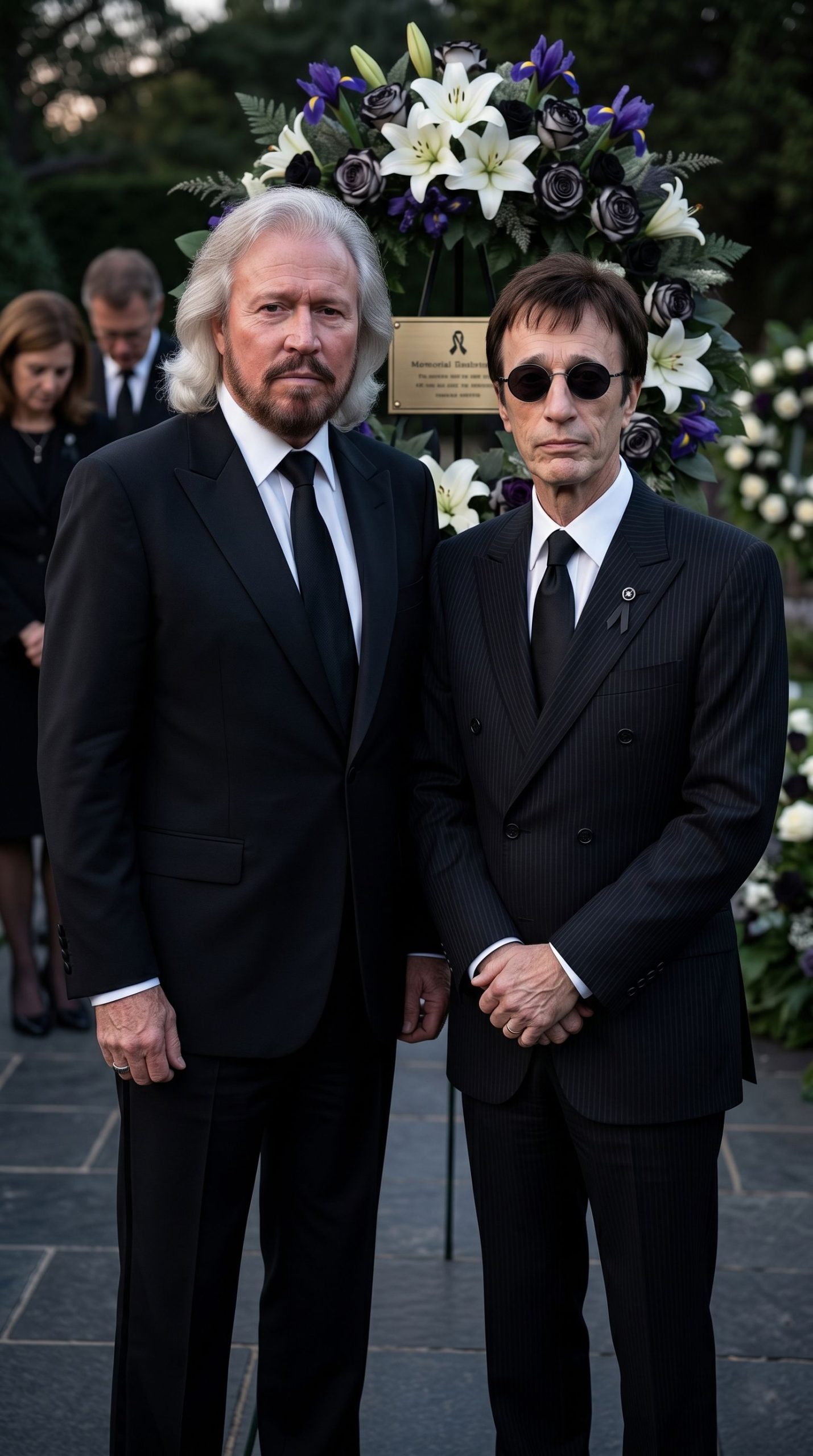
WHY THE BEE GEES WERE NEVER THE SAME AFTER 2003: The Loss of Maurice Gibb and the End of an Extraordinary Era
For decades, the Bee Gees were defined not only by their timeless songs and unmistakable harmonies but also by the unique bond shared by brothers Barry Gibb, Robin Gibb, and Maurice Gibb. Their relationship as family was inseparable from their success as musicians.
That bond was forever changed in January 2003.
Maurice Gibb died at the age of 53 following complications related to an intestinal condition that required emergency surgery. His unexpected passing shocked fans around the world and devastated those closest to him, leaving a profound emotional void in one of popular music’s most celebrated groups.
For Barry and Robin, the loss was about far more than the death of a bandmate.
Maurice had long been regarded as the quiet stabilizing force within the Bee Gees—a gifted multi-instrumentalist, arranger, and collaborator whose musical instincts helped shape the group’s signature sound. Offstage, he often played the role of peacemaker, helping maintain unity through the many creative and personal challenges the brothers faced over the years.
In the aftermath of his death, Barry and Robin publicly expressed uncertainty about the future of the Bee Gees. Both questioned whether the group could truly continue without all three brothers, emphasizing that the Bee Gees had always been built on their lifelong relationship as a family rather than simply as professional musicians.
For a period, they chose not to record or perform under the Bee Gees name, believing that Maurice’s absence fundamentally altered the identity of the group. Although Barry and Robin would later reunite for selected projects and performances, they frequently acknowledged that the dynamic they shared with Maurice could never be recreated.
Many fans have pointed to this decision as evidence of the extraordinary respect and affection the brothers had for one another. Instead of viewing the Bee Gees as a brand that could continue indefinitely, Barry and Robin recognized it as a partnership rooted in shared history, mutual trust, and decades of collaboration.
Today, Maurice’s contributions continue to be celebrated not only through classic recordings but also through the memories of those who admired his musicianship and quiet presence. Songs spanning every era of the Bee Gees’ career bear the imprint of his creativity, whether through his instrumental arrangements, vocal harmonies, or behind-the-scenes guidance.
Looking back, 2003 marked a turning point from which the Bee Gees could never fully return. Yet the brothers’ decision to honor Maurice’s place within the trio also reinforced the values that made their story so compelling: loyalty, family, and an unwavering belief that their greatest achievements were created together.
In the end, the Bee Gees’ legacy is not defined solely by chart records or international success. It is equally defined by three brothers whose connection transcended music—and whose enduring bond continues to inspire listeners around the world long after the final harmony faded.