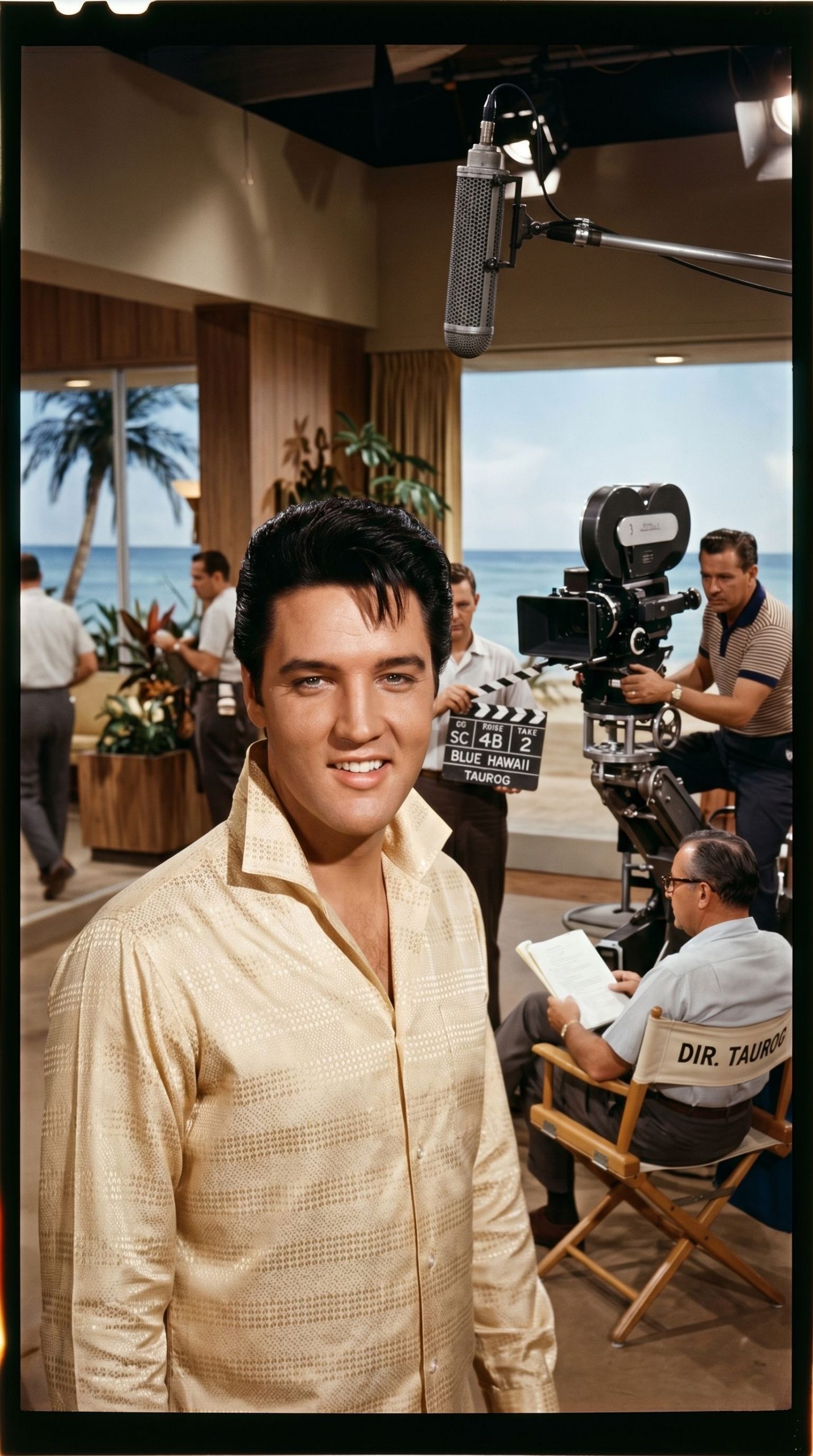
MORE THAN THE KING OF ROCK ’N’ ROLL: How Elvis Presley Became a Star of Both Music and the Silver Screen
When people think of Elvis Presley, they often picture the groundbreaking performer whose voice and stage presence helped transform popular music. Yet Elvis’s influence extended far beyond the recording studio. Over the course of his career, he also established himself as one of Hollywood’s most recognizable leading men, appearing in more than 30 feature films and demonstrating that a musician could become a major box office attraction.
Elvis made his film debut in 1956 with Love Me Tender, arriving in theaters at a time when his music career was already exploding in popularity. The movie introduced audiences to his screen presence and paved the way for a long run of starring roles that blended romance, comedy, adventure, and musical performances.
Throughout the late 1950s and 1960s, Elvis appeared in a succession of successful films, including Jailhouse Rock, King Creole, Blue Hawaii, Viva Las Vegas, and Girl Happy. While critics sometimes offered mixed reviews of the storylines, audiences consistently flocked to theaters, drawn by Elvis’s charisma and the opportunity to hear new songs performed on screen.
His dual success created a powerful synergy between music and cinema. Many of his films featured original soundtracks that produced hit singles, while the popularity of those songs encouraged even more fans to see the movies. This mutually reinforcing cycle helped make Elvis one of the entertainment industry’s most commercially successful figures during the era.
Among his cinematic achievements, Jailhouse Rock is frequently celebrated for its iconic musical sequences, while King Creole has earned praise from many historians as one of his strongest dramatic performances. Blue Hawaii, meanwhile, became a cultural phenomenon and showcased Elvis’s ability to combine lighthearted storytelling with memorable music.
Although his focus eventually shifted back toward live performances—especially after his acclaimed 1968 television comeback special—his years in Hollywood left a lasting mark on popular culture. He demonstrated that a recording artist could successfully cross into acting without losing the connection that made audiences embrace him in the first place.
That legacy continues to resonate today. Countless entertainers have pursued careers spanning both music and film, following a path that Elvis helped popularize decades earlier. His example showed that artistic versatility and mainstream appeal could coexist, opening doors for future generations of performers.
Ultimately, Elvis Presley’s place in history rests not only on his revolutionary impact as the King of Rock ’n’ Roll but also on his accomplishments as a movie star. By conquering two of the world’s biggest entertainment industries, he created a model of crossover success that remains influential and inspiring to this day.