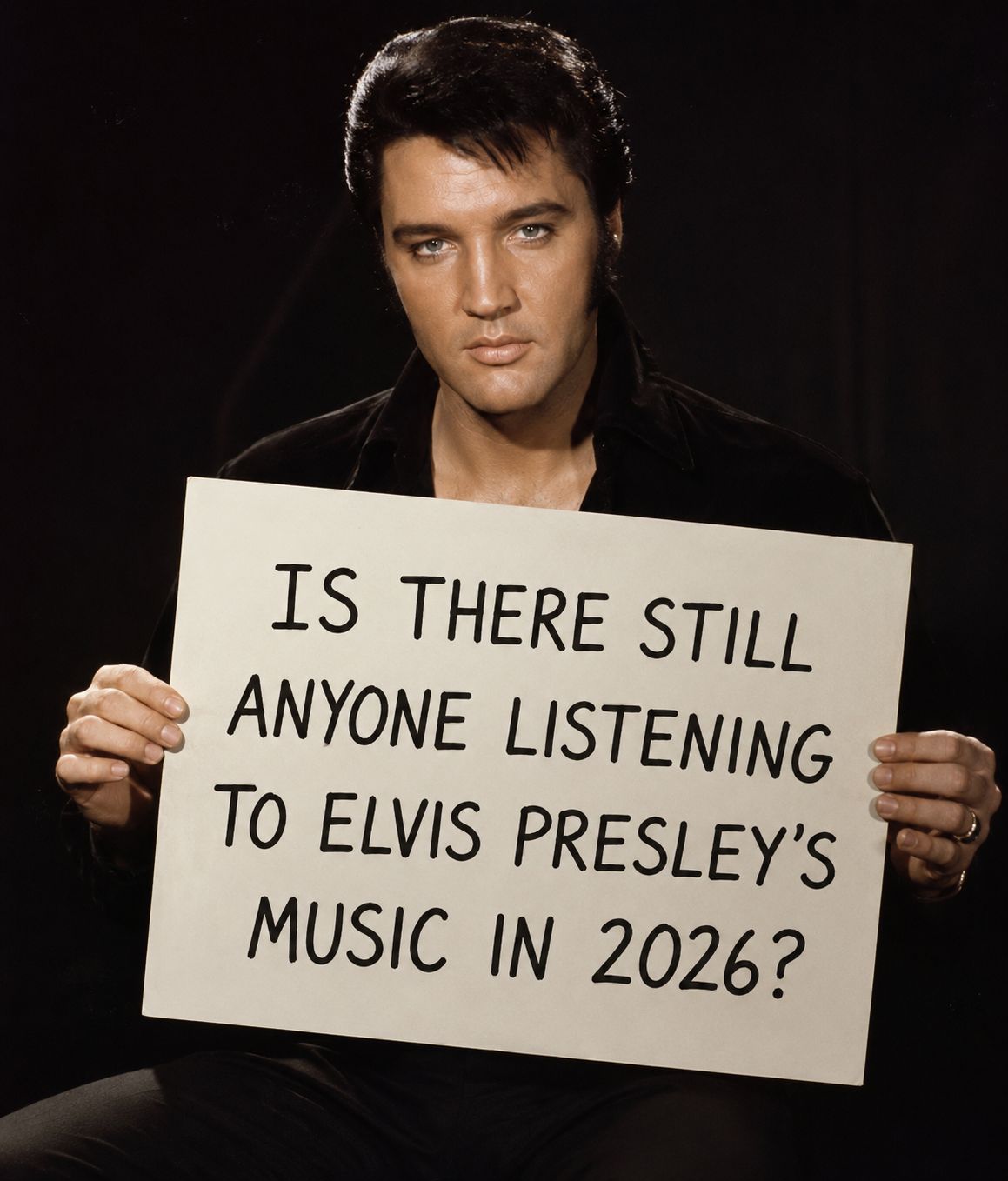
THE SONGS THAT REFUSED TO GROW OLD: Why Elvis Presley’s Music Continues To Win Hearts Across Every Generation
Nearly seventy years have passed since Elvis Presley first changed the sound of popular music.
In an industry where countless hit songs disappear within months and musical trends often fade as quickly as they arrive, Elvis has accomplished something extraordinarily rare.
His music never truly left.
Every generation seems to discover him all over again.
Teenagers who never experienced the 1950s find themselves captivated by his recordings.
Parents introduce his songs to their children.
Grandparents proudly share the music that shaped their own youth.
Streaming platforms, documentaries, films, and social media have introduced the King of Rock ’n’ Roll to millions of listeners who were born decades after his final performance.
The remarkable question is no longer whether Elvis remains relevant.
It is why.
Why do songs recorded more than half a century ago still feel so alive?
Part of the answer begins with the extraordinary quality of the music itself.
Elvis never limited himself to a single style.
He could ignite a room with the energy of Jailhouse Rock.
He could fill listeners with optimism through Burning Love.
He could bring quiet emotion to ballads such as Can’t Help Falling in Love.
He could move audiences with heartfelt gospel performances that reflected the music he loved from childhood.
Each recording revealed a different side of the artist.
Because his catalog spans so many emotions and musical styles, every listener eventually discovers an Elvis song that feels personal.
Another reason his recordings continue resonating is the sincerity in his voice.
Many technically gifted singers have achieved commercial success.
Far fewer possess the ability to make every lyric sound deeply authentic.
When Elvis sang about hope, listeners believed him.
When he expressed heartbreak, they felt it.
When he celebrated joy, audiences celebrated with him.
His voice communicated emotion as naturally as conversation.
That quality never grows outdated.
Music also has a remarkable ability to travel across generations.
A single recording can connect grandparents with grandchildren.
Parents with children.
Friends separated by decades of age.
Elvis’s songs have become part of those shared moments.
A familiar melody playing during a family gathering.
An old record discovered by a curious teenager.
A classic performance appearing unexpectedly in a film, television series, or viral video online.
Each new encounter introduces another listener to an artist whose work continues speaking long after the era in which it was created.
Modern technology has only expanded that reach.
Streaming services have placed Elvis’s recordings alongside today’s biggest artists, allowing young audiences to discover his music with the same ease as contemporary releases.
Short-form videos regularly feature his classics.
Musicians continue recording new interpretations of his songs.
Films and documentaries introduce his story to people who previously knew little about him.
The result is something remarkable.
Instead of remaining frozen in history, Elvis’s music continues participating in today’s cultural conversation.
His influence extends far beyond the songs he recorded himself.
Generations of artists have acknowledged the impact Elvis had on their own careers.
His willingness to blend gospel, country, rhythm and blues, and early rock and roll helped reshape popular music.
That creative freedom inspired countless performers who followed, proving that great artists are often remembered not only for what they created, but also for the possibilities they opened for others.
Perhaps the greatest reason Elvis endures, however, is that his songs speak about experiences every generation understands.
Love.
Hope.
Loneliness.
Faith.
Heartbreak.
Celebration.
These emotions never become outdated.
The world changes.
Technology changes.
Musical styles evolve.
Human emotions remain remarkably constant.
That is why a young listener in the twenty-first century can still feel deeply connected to a song recorded decades before they were born.
Visitors who travel to Graceland often notice something extraordinary.
The crowds include people of every age.
Some remember watching Elvis perform on television.
Others discovered him through streaming playlists or recent films.
Many arrive from countries he never visited during his lifetime.
Yet they all share the same admiration for the music that continues bringing generations together.
That scene perfectly captures the true measure of Elvis Presley’s legacy.
His recordings are not simply historical artifacts.
They are living music.
They continue finding new listeners.
They continue creating new memories.
They continue inspiring artists who were born long after his final concert.
Nearly fifty years after his passing, the King of Rock ’n’ Roll still fills playlists around the world.
His greatest hits remain among the most recognizable songs ever recorded.
His voice continues crossing generations without losing its emotional power.
That is something very few artists ever achieve.
Perhaps that is the real answer to why Elvis’s music refuses to grow old.
It was never built on passing trends or temporary popularity.
It was built on unforgettable melodies, genuine emotion, fearless creativity, and a voice capable of reaching people from every generation.
Time may change the world.
It may change the way we listen to music.
It may introduce countless new stars.
But truly timeless songs possess a different kind of power.
They continue speaking to the human heart, no matter how many years pass.
That is why Elvis Presley remains more than a legendary performer.
He remains a living part of the soundtrack of millions of lives.
Because true legends are not measured by how long they were on stage.
They are measured by how long their music continues to move people after the final curtain has fallen.
And by that measure, Elvis Presley is still performing for the world today.