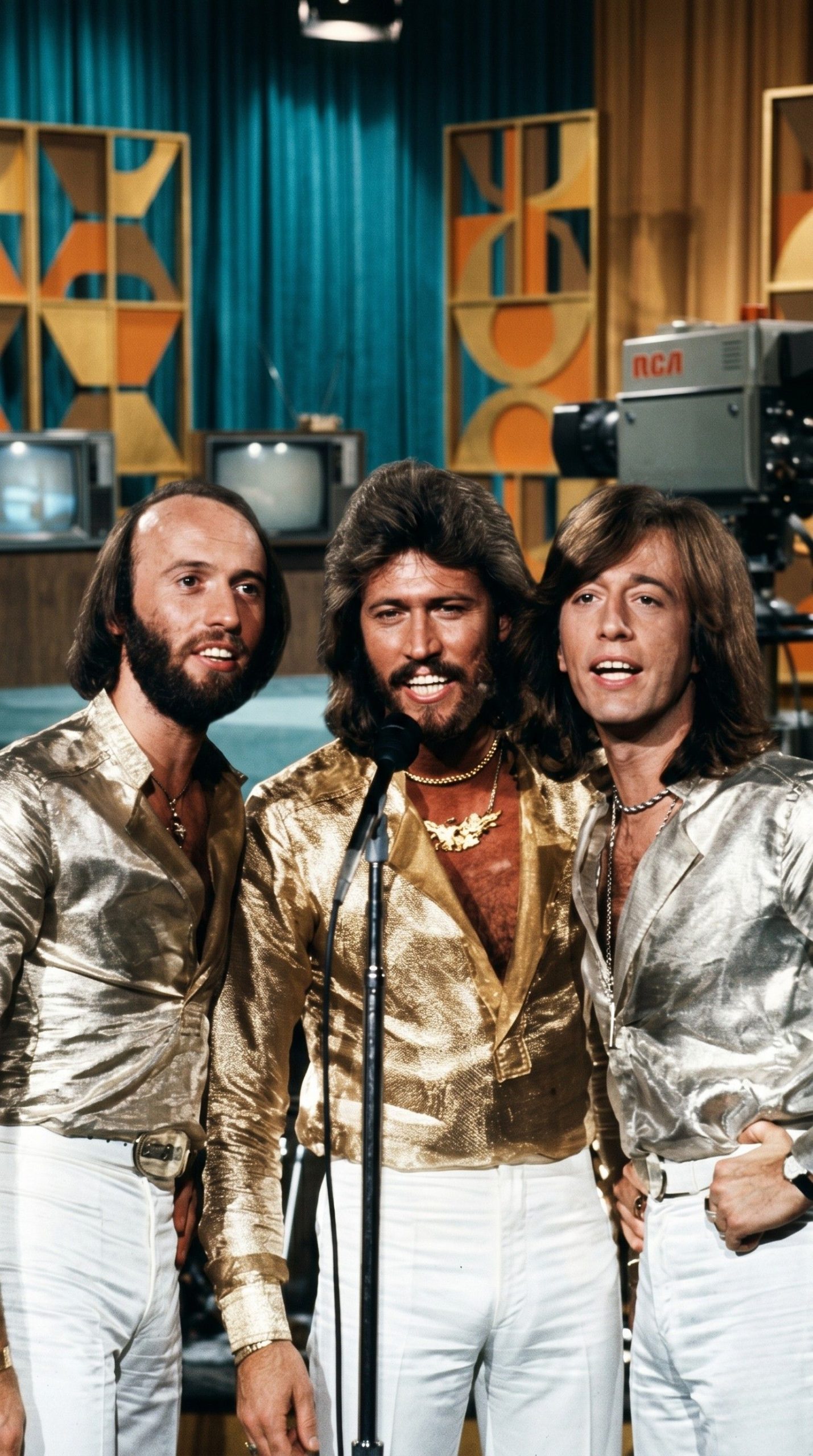
THE BEE GEES SONG THAT CHANGED DISCO FOREVER: How “You Should Be Dancing” Redefined the Group’s Sound
By the mid-1970s, the Bee Gees were already respected songwriters with an impressive catalog of pop and ballads. But in 1976, they released a song that would transform not only their own career but also the sound of disco itself: “You Should Be Dancing.”
The track was more than just another hit single. It marked a pivotal creative moment in which Barry Gibb embraced an expressive falsetto style throughout much of the performance, creating a vocal identity that would become synonymous with the Bee Gees’ late-1970s success.
Although Barry had used falsetto on earlier recordings, “You Should Be Dancing” showcased it with a new level of confidence and prominence. The soaring high notes added urgency, excitement, and unmistakable character to the song, helping distinguish it from anything else on the radio at the time.
Behind that unforgettable vocal performance stood the collaborative talents of Robin Gibb and Maurice Gibb, whose harmonies and musical contributions gave the recording its richness and balance. Together, the three brothers crafted a sound that blended rhythm and blues influences with pop craftsmanship and irresistible dance grooves.
The production itself was equally innovative. Tight percussion, energetic bass lines, layered keyboards, and polished arrangements created a propulsive rhythm that encouraged listeners to move while still leaving room for sophisticated vocal interplay. Every element was carefully designed to serve the song’s infectious energy.
Released before the explosion of Saturday Night Fever, “You Should Be Dancing” became the Bee Gees’ first No. 1 hit in the United States and demonstrated that the group had successfully reinvented itself for a new musical era. The recording paved the way for later classics such as “Stayin’ Alive,” “Night Fever,” and “More Than a Woman,” all of which would further cement their status as defining voices of the disco movement.
Yet the song’s influence extends beyond chart success.
Barry Gibb’s signature falsetto became one of the most recognizable vocal styles in popular music, inspiring generations of singers across genres ranging from disco and pop to R&B and contemporary soul. Its emotional intensity and technical precision helped prove that falsetto could be more than a novelty—it could serve as the emotional centerpiece of a performance.
Decades later, “You Should Be Dancing” remains a staple of dance floors, films, and live performances around the world. Its driving rhythm and unforgettable chorus continue to capture the exuberance of an era while reminding listeners of the Bee Gees’ remarkable ability to evolve and innovate.
Looking back, the song stands as more than a disco anthem. It represents a bold artistic leap that reshaped the Bee Gees’ identity and left an enduring imprint on popular music, demonstrating how one inspired creative decision can change the course of an entire career.