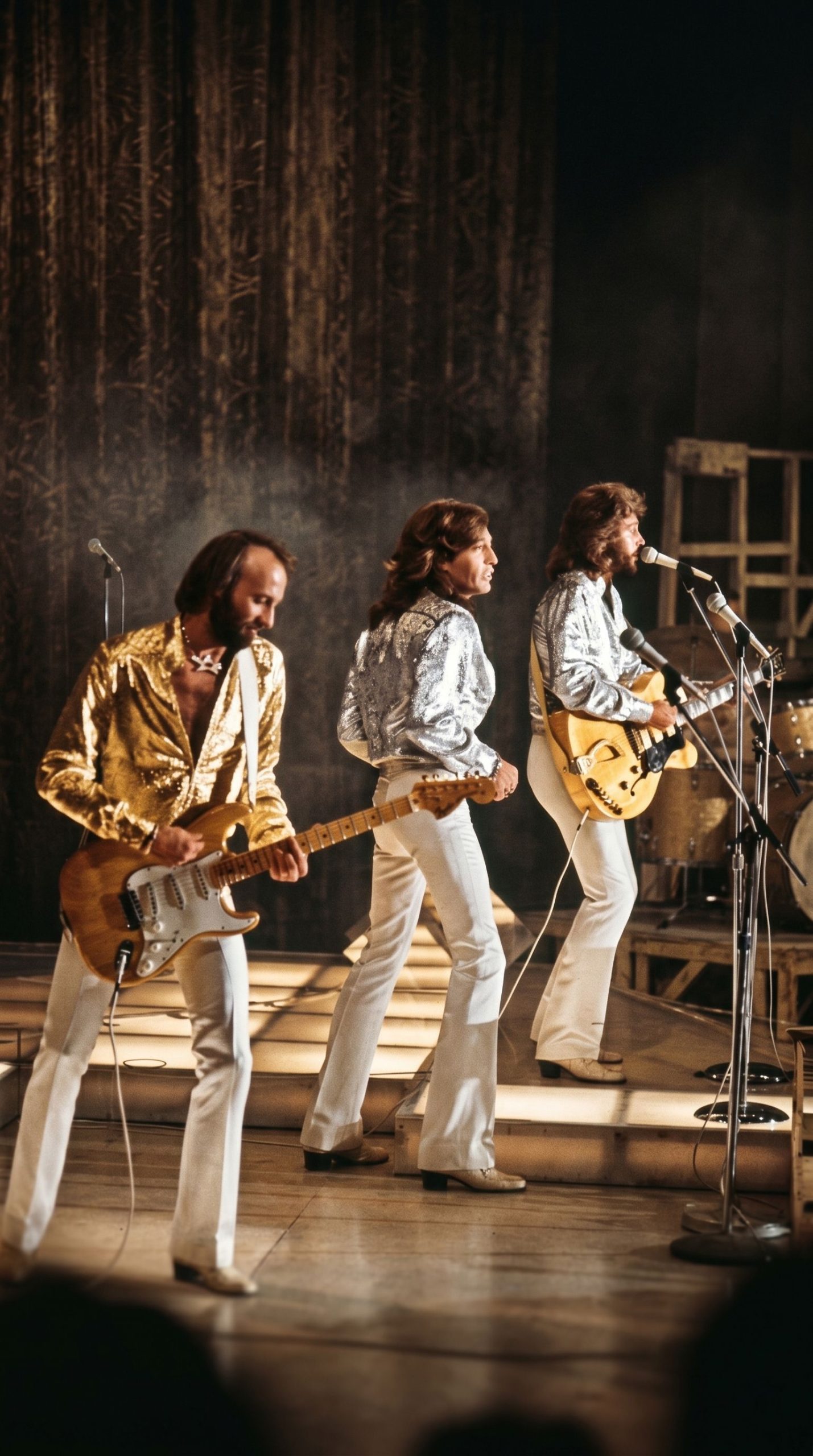
THE BEE GEES VERSION MOST FANS NEVER HEARD: Why Robin Gibb’s Original Recording of “Love Me” Deserves a Second Look
When music fans hear the song “Love Me,” many immediately think of Yvonne Elliman and the emotional ballad that helped establish her as one of the most distinctive voices of the 1970s.
What many listeners do not realize, however, is that the song began its journey with the Bee Gees themselves.
Long before Elliman’s version became a hit, Robin Gibb recorded a remarkably tender interpretation that remains one of the hidden gems in the Bee Gees’ catalog.
Written by Barry, Robin, and Maurice Gibb, Love Me appeared on the Bee Gees’ 1976 album Children of the World. While the album is often remembered for energetic tracks such as You Should Be Dancing, songs like Love Me revealed a completely different side of the group’s artistry.
At the center of the recording is Robin Gibb’s unmistakable voice.
Unlike the powerful falsetto style that would soon become one of the Bee Gees’ trademarks, Robin approaches Love Me with restraint and vulnerability. His performance feels deeply personal, as though he is speaking directly to the listener rather than performing for a large audience.
That intimacy gives the song much of its emotional power.
The arrangement is elegant and understated, allowing the melody and lyrics to take center stage. Rather than relying on dramatic production, the recording draws its strength from sincerity and emotional honesty.
For longtime Bee Gees fans, the track serves as a reminder that the brothers were capable of much more than dance-floor anthems.
They were master songwriters who excelled at crafting heartfelt ballads filled with longing, tenderness, and emotional complexity.
When Yvonne Elliman later recorded Love Me, she brought her own interpretation to the song and introduced it to a much wider audience. Her version became a significant success, reaching listeners who may never have heard the original recording.
As a result, Elliman’s rendition became the definitive version for many music fans.
Yet over time, a growing number of listeners have returned to Robin Gibb’s original performance and discovered qualities that make it uniquely special.
There is a fragility in Robin’s voice that perfectly complements the song’s themes. Every phrase feels carefully delivered, creating an atmosphere of quiet reflection rather than dramatic heartbreak.
Listening today, it becomes clear why some fans consider the Bee Gees’ version one of the most underrated recordings of the era.
It captures a side of Robin Gibb that was often overshadowed by the group’s larger commercial successes—a singer capable of conveying profound emotion with remarkable subtlety.
More than four decades later, Love Me remains a testament to the Bee Gees’ extraordinary versatility.
Whether listeners prefer Yvonne Elliman’s hit version or Robin Gibb’s original interpretation, the song stands as a reminder of the exceptional songwriting talent that defined the Gibb brothers throughout their career.
And for those discovering the original recording for the first time, it may feel less like an overlooked album track and more like a hidden masterpiece waiting to be appreciated all over again.