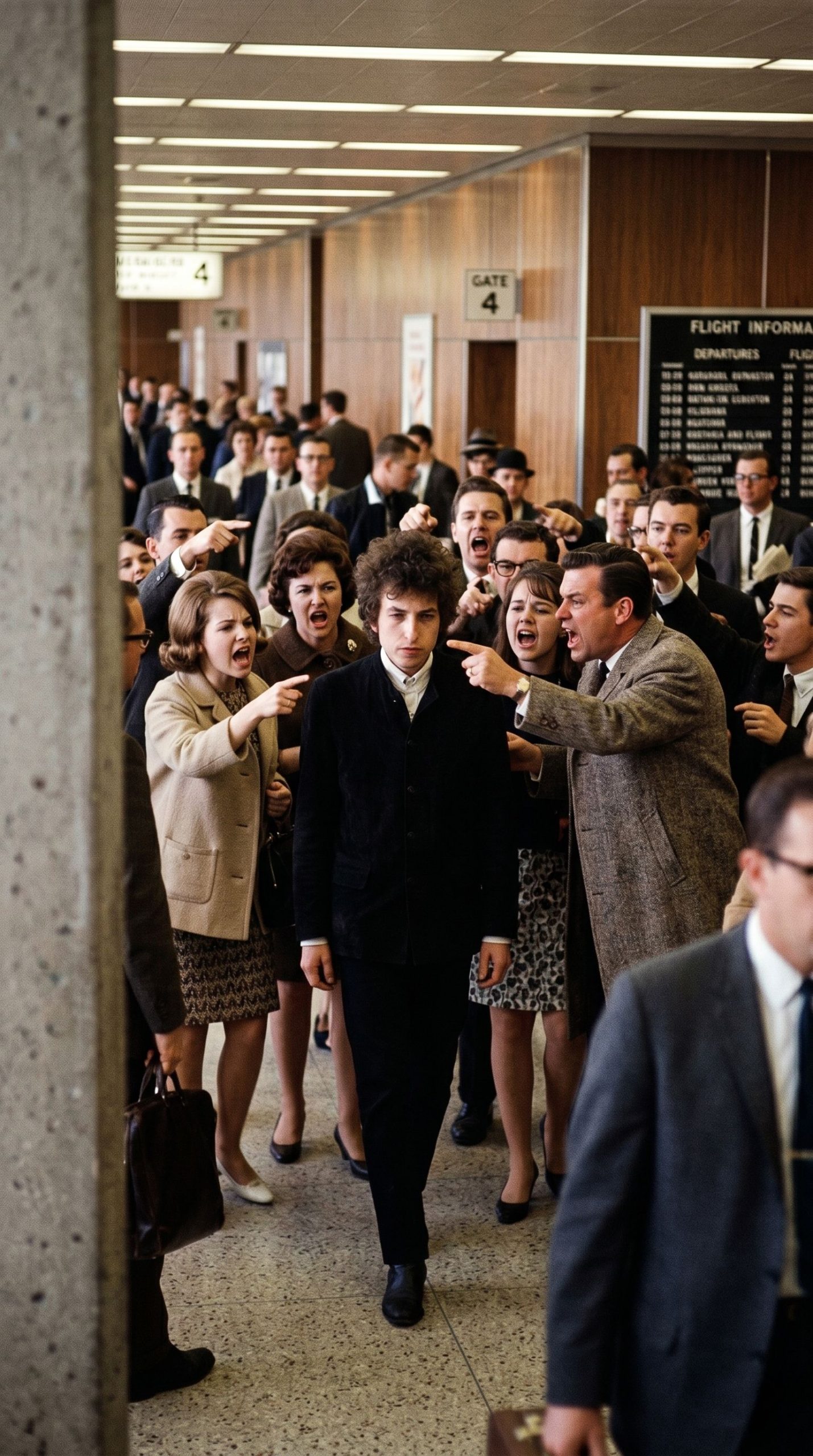
THE WOODSTOCK SNUB THAT SHOCKED A GENERATION: Why Bob Dylan Chose Not to Play the Most Famous Festival of the 1960s
Few decisions in music history have generated as much speculation as Bob Dylan’s absence from Woodstock in 1969.
After all, the festival was held just miles from Dylan’s home in Woodstock, New York. Many fans assumed his appearance was practically guaranteed. Some promoters and investors even benefited from widespread public expectations that the legendary songwriter would take part in the event.
Yet when hundreds of thousands of music fans gathered for what would become the most famous music festival in history, Dylan was nowhere to be found.
His absence stunned many attendees.
How could the artist most closely associated with the Woodstock community choose not to appear at Woodstock itself?
The answer is more complicated than many people realize.
At the time, Dylan had spent several years largely avoiding the public spotlight following his famous motorcycle accident in 1966. While many of his contemporaries were embracing the growing counterculture movement, Dylan had become increasingly uncomfortable with being viewed as a political spokesman or symbolic leader of a generation.
In many ways, he was already moving in a different direction.
According to numerous accounts from people close to the situation, Dylan was frustrated by the constant crowds gathering around his home in Woodstock. The town had become a destination for fans, journalists, and curious visitors who hoped to catch a glimpse of the elusive songwriter.
Some biographers have suggested that Dylan viewed the massive festival as an extension of the celebrity culture he had been trying to escape.
There were also practical considerations.
During the summer of 1969, Dylan had agreed to make a rare live appearance at the Isle of Wight Festival in England. Promoters reportedly offered a substantial performance fee, and the event gave Dylan an opportunity to return to the stage on terms he found more comfortable.
As a result, while Woodstock was taking place in New York, Dylan was preparing for a very different kind of comeback.
When he eventually appeared at the Isle of Wight Festival later that month alongside members of The Band, the performance attracted enormous international attention. For Dylan, it marked one of his most important live appearances since withdrawing from intensive touring several years earlier.
Meanwhile, Woodstock continued without him.
Ironically, Dylan’s absence may have made the festival even more legendary.
Fans spent decades debating what might have happened if he had appeared. Would his performance have become the defining moment of the weekend? Would history remember the festival differently? Those questions remain impossible to answer.
What is clear is that Dylan’s decision reflected a pattern that had already become familiar throughout his career.
Whenever the public expected him to follow a particular path, he often chose another.
When fans wanted protest songs, he moved away from politics.
When audiences expected acoustic folk music, he plugged in an electric guitar.
And when many assumed he would headline Woodstock, he boarded a plane for England instead.
Looking back more than half a century later, the decision still fascinates music historians.
Woodstock became a symbol of an era.
Bob Dylan became one of its most influential artists.
Yet the two never officially came together on that famous stage.
For some fans, that remains one of the great “what if” stories in music history.
For others, it was simply another example of Bob Dylan doing exactly what nobody expected.