A TRAITOR? The Moment Bob Dylan Divided the Folk World Forever
For a brief period in the early 1960s, Bob Dylan seemed destined to become something larger than a musician.
With songs such as Blowin’ in the Wind, The Times They Are A-Changin’, and Masters of War, Dylan became closely associated with the protest movements of the era. To many young Americans, he appeared to be the voice of a generation demanding social change, civil rights, and a new vision for the future.
But Dylan himself was never comfortable with that role.
While fans, journalists, and activists increasingly treated him as a political spokesman, he resisted being placed inside any ideological box. He often insisted that he was a songwriter, not a movement leader. Yet the more famous he became, the more difficult it was for the public to separate the man from the image they had created.
The tension reached a breaking point in the mid-1960s.
By then, Dylan had grown restless. Artistically, he was moving beyond traditional folk music and exploring new sounds, new influences, and new ways of writing songs. He was listening to rock and roll, blues, and electric music, and he no longer wanted to be limited by the expectations of the folk community.
Then came the moment that changed everything.
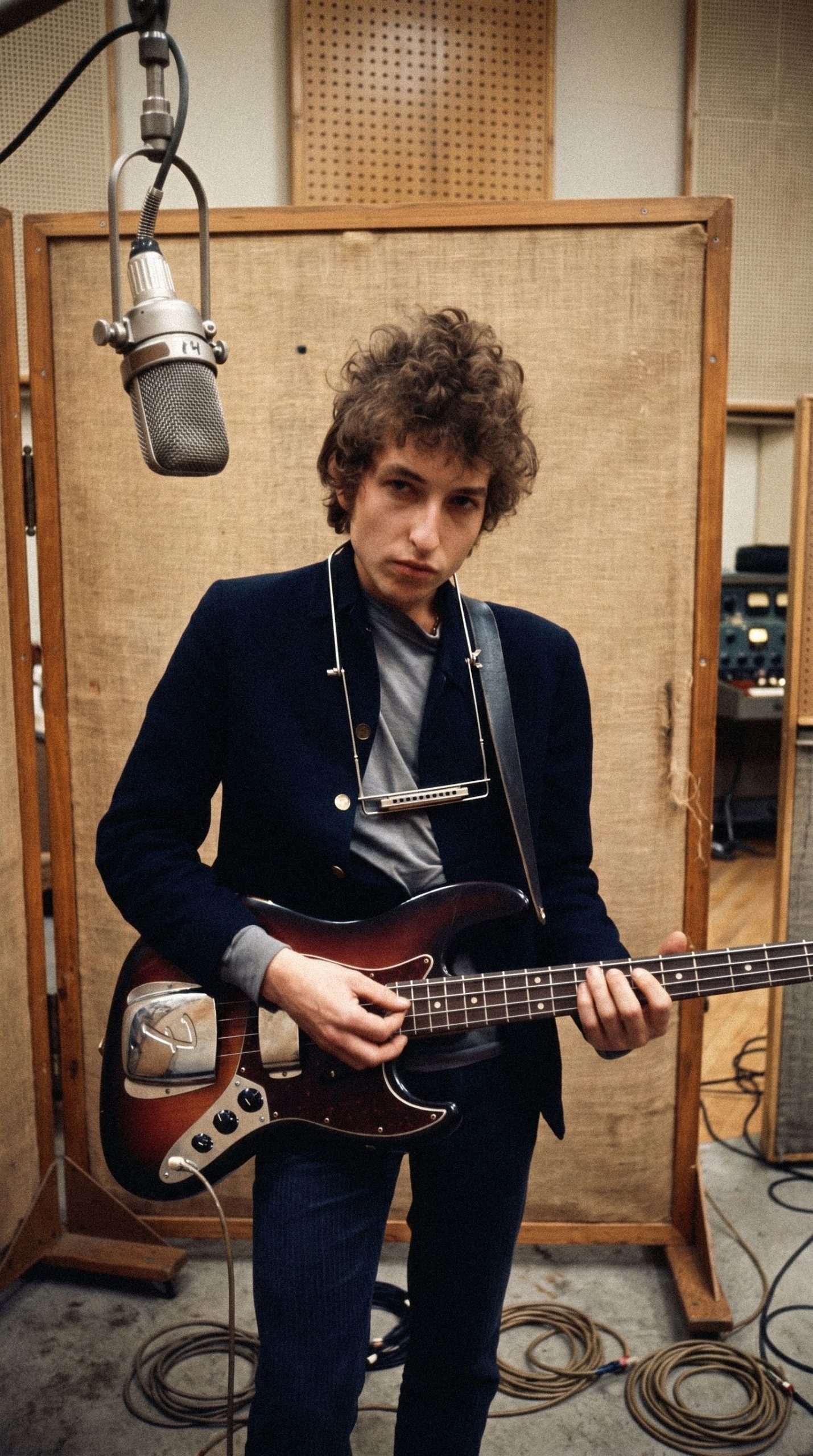
In July 1965, Dylan appeared at the Newport Folk Festival with an electric guitar and a backing band. What followed became one of the most famous controversies in music history.
Some audience members cheered.
Others were horrified.
For many folk purists, Dylan’s electric performance felt like a betrayal of everything he supposedly represented. Critics accused him of abandoning folk traditions, chasing commercial success, and turning his back on the movement that had helped make him famous.
The backlash was immediate.
Newspapers debated the performance. Folk fans argued fiercely among themselves. Everywhere Dylan performed, the controversy seemed to follow him.
Yet the dispute was about far more than an electric guitar.
At its heart was a deeper conflict over ownership.
Many supporters believed Dylan belonged to the folk movement. They saw his songs as part of a collective struggle for social change and expected him to remain faithful to that role.
Dylan disagreed.
He believed artists needed the freedom to evolve, experiment, and follow their own creative instincts. The idea that he should remain forever frozen as a protest singer felt restrictive and dishonest.
The conflict intensified during his 1965–1966 tours.
Night after night, audiences reacted emotionally to his electric sets. Some embraced the new direction. Others openly booed. The tension reached its most famous moment in Manchester, England, when an audience member shouted, “Judas!”
The accusation captured exactly how many critics felt.
To them, Dylan had betrayed the folk movement.
But Dylan saw things differently.
Rather than retreating, he doubled down. Turning to his band, he reportedly instructed them to “Play it loud.” They launched into a ferocious version of Like a Rolling Stone, creating one of the defining moments in rock history.
Over time, perceptions began to change.
The very music that had once sparked outrage eventually came to be viewed as revolutionary. Albums such as Bringing It All Back Home, Highway 61 Revisited, and Blonde on Blonde are now widely regarded as masterpieces that transformed popular music forever.
Looking back, many historians argue that Dylan was never betraying the folk movement at all.
He was simply refusing to become trapped by it.
The controversy revealed a fundamental truth about artistic innovation: audiences often celebrate originality until it challenges their expectations. When artists evolve, some fans follow them, while others feel left behind.
More than sixty years later, the debate still fascinates music lovers.
Was Dylan a traitor to the folk movement?
Or was he an artist brave enough to risk everything in pursuit of creative freedom?
History has largely delivered its verdict.
The music that once divided audiences helped redefine what popular music could be. The songs that provoked outrage became classics. And the artist accused of betrayal continued to reinvent himself again and again.
In the end, the historic divide was not caused by an electric guitar.
It was caused by a songwriter who refused to let anyone else decide who he was supposed to be.