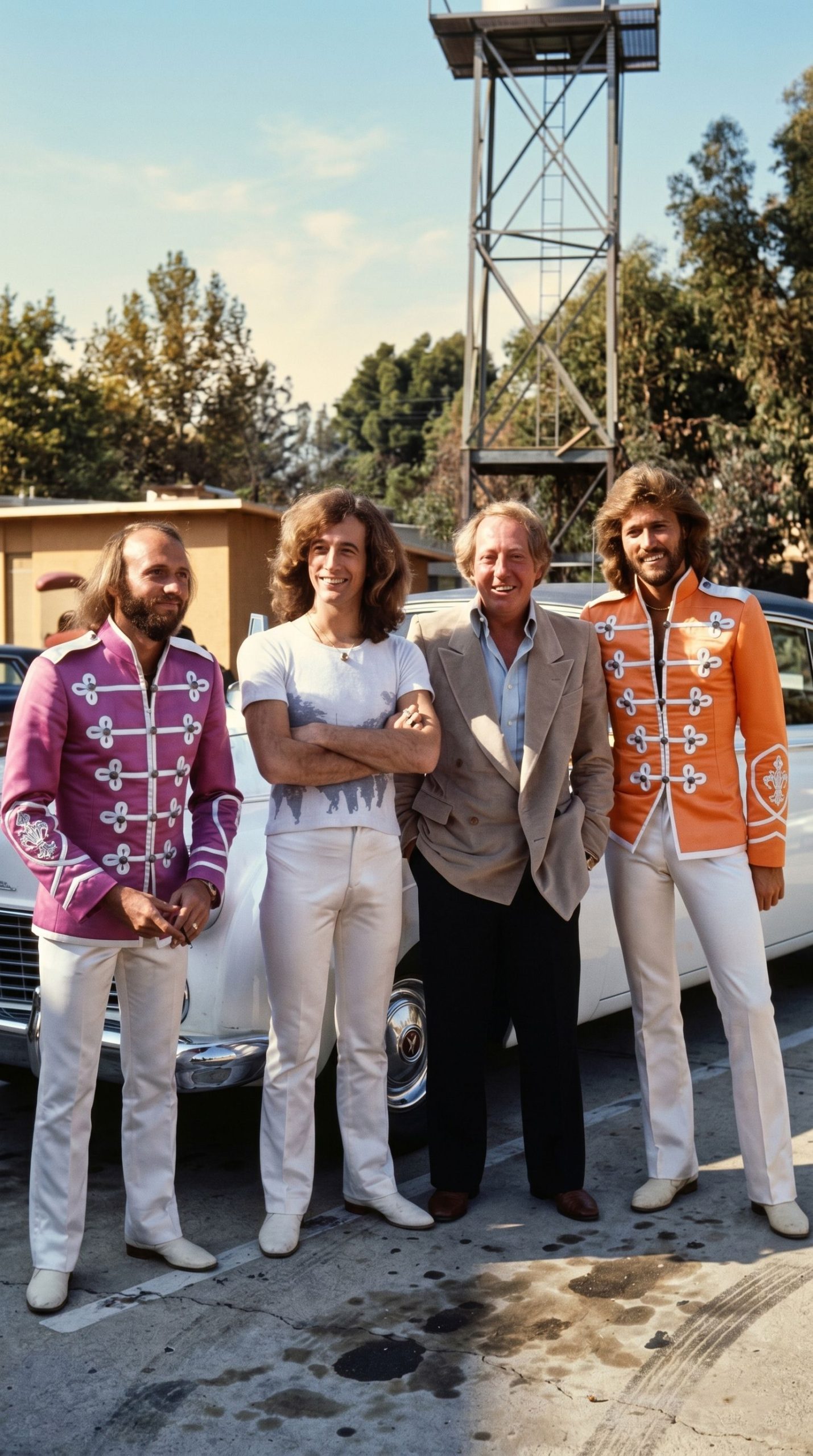
WHEN THE BEE GEES FACED THEIR BIGGEST BUSINESS CHALLENGE: The Royalty Dispute That Tested One of Music’s Most Successful Partnerships
To fans around the world, the Bee Gees appeared unstoppable. By the end of the 1970s, brothers Barry Gibb, Robin Gibb, and Maurice Gibb had achieved extraordinary commercial success through hit records, sold-out performances, and the global phenomenon of Saturday Night Fever.
Behind the scenes, however, the early 1980s brought a very different kind of challenge.
During that period, business disagreements arose between the Bee Gees and their longtime manager, Robert Stigwood, who had played a significant role in guiding the group’s career and helping establish them as international stars. The issues reportedly centered on royalties, contractual arrangements, and financial matters stemming from years of highly successful collaborations.
The dispute eventually led to legal proceedings, creating uncertainty about one of the music industry’s most influential partnerships. For observers, it was a reminder that even enormously successful artistic relationships can become strained when complex business interests are involved.
Despite the tension, both sides shared a long history of mutual achievement.
Under Stigwood’s management, the Bee Gees experienced some of the most commercially successful years of their career, while the brothers’ songwriting and performances contributed significantly to projects that reshaped popular music and film. Their collaboration produced landmark successes that continue to resonate with audiences decades later.
Rather than allowing the disagreement to escalate indefinitely, the parties ultimately resolved the matter through an agreement reached outside the courtroom. The settlement brought the legal conflict to an end and allowed everyone involved to move forward without a prolonged public trial.
Importantly, the business dispute did little to diminish the Bee Gees’ artistic reputation. In the years that followed, the group continued recording, writing songs for other artists, and earning renewed appreciation for the breadth of its catalog beyond the disco era.
Looking back, the episode illustrates the often-overlooked reality that creative brilliance and commercial success are frequently accompanied by complicated financial and contractual considerations. Even the closest professional relationships can face difficult negotiations as careers evolve and fortunes change.
Today, fans remember the Bee Gees primarily for their extraordinary music rather than their legal challenges. Their timeless harmonies, innovative songwriting, and remarkable ability to reinvent themselves remain the defining elements of their legacy.
In the end, the disagreement with Robert Stigwood became just one chapter in a much larger story—one in which the enduring power of the Bee Gees’ music ultimately outshone the business conflicts that briefly threatened to overshadow it.