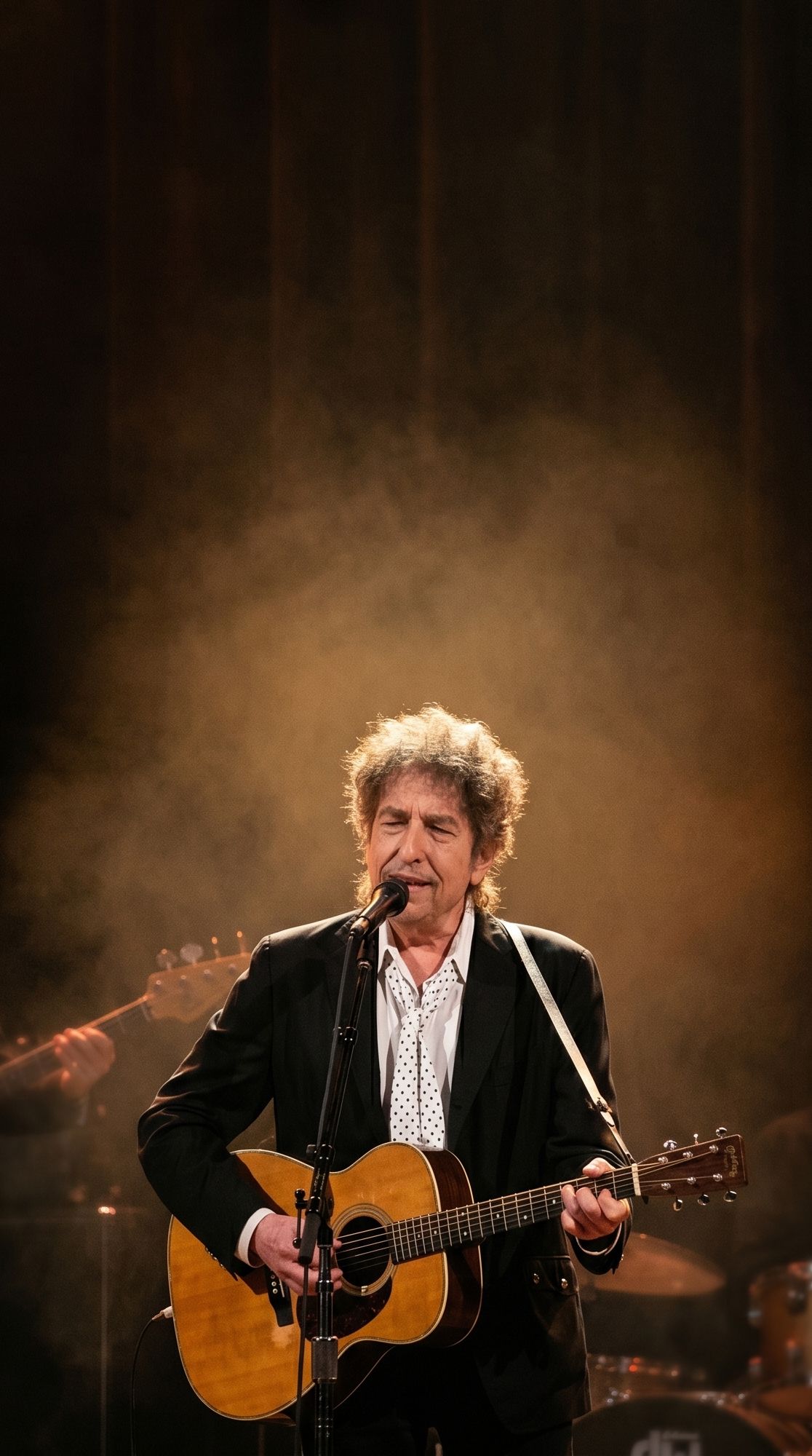
“THE RETURN OF ‘JUDAS’?” — Bob Dylan’s Latest Reinventions Spark a New Wave of Debate Among Fans
More than half a century after one of the most famous confrontations in music history, Bob Dylan is once again finding himself at the center of a passionate debate.
For longtime fans, the word “Judas” carries enormous historical significance. It recalls the legendary 1966 concert in Manchester, England, when an audience member famously shouted “Judas!” at Dylan for abandoning traditional folk music and embracing electric instruments. Rather than retreating, Dylan pushed forward, forever changing the course of modern music.
Now, decades later, some fans believe history may be repeating itself.
Across recent tours, Dylan has continued one of the most controversial habits of his later career: radically reinventing his classic songs. Instead of performing beloved hits exactly as they appeared on record, he frequently transforms them into entirely new musical experiences.
For some audience members, these changes are fascinating.
For others, they are deeply frustrating.
The debate has become especially intense because many fans attend Dylan concerts hoping to hear familiar versions of iconic songs such as Like a Rolling Stone, Blowin’ in the Wind, Tangled Up in Blue, or Simple Twist of Fate.
Instead, they sometimes encounter arrangements that sound dramatically different from the recordings they have known for decades.
Tempos change.
Melodies shift.
Lyrics are occasionally delivered in unexpected ways.
Entire musical structures can be altered.
In some cases, casual listeners barely recognize the songs at all.
This has created a divide within Dylan’s audience.
Critics argue that the constant reinvention makes it difficult to connect emotionally with songs that hold deep personal meaning. Some fans feel disappointed when they cannot easily sing along or immediately identify a beloved classic.
To them, the original versions represent musical landmarks that should be preserved rather than reshaped.
Supporters, however, see the situation very differently.
They argue that Dylan has never viewed songs as fixed objects frozen in time. Throughout his career, he has treated music as something alive—something that evolves, changes, and grows alongside the artist performing it.
From this perspective, repeating songs exactly the same way for decades would actually contradict the creative spirit that made Dylan famous in the first place.
Many historians of Dylan’s work point out that he has been reinventing songs since the beginning of his career. Even during the 1960s, he frequently altered arrangements, modified lyrics, and experimented with different musical approaches.
The difference today is that the changes are often more dramatic and more noticeable.
What some fans hear as unnecessary revision, others hear as artistic courage.
Those who defend Dylan often note that he appears far more interested in exploring a song than preserving it. Rather than treating concerts as nostalgic recreations of the past, he approaches performances as opportunities to discover new meanings hidden within familiar material.
A song written fifty years ago may carry a completely different emotional weight when performed by an eighty-five-year-old artist reflecting on a lifetime of experiences.
That philosophy helps explain why Dylan continues challenging expectations.
Throughout his career, he has repeatedly refused to become his own tribute act.
When audiences wanted folk music, he embraced electric rock.
When critics expected protest songs, he explored personal themes.
When listeners demanded familiar formulas, he reinvented himself once again.
Time after time, Dylan has chosen artistic curiosity over public comfort.
This history is precisely why comparisons to the infamous “Judas” incident have resurfaced.
In both situations, the core issue is not simply music.
It is the relationship between an artist and an audience.
How much does an artist owe to listener expectations?
Should classic songs remain unchanged?
Or does a songwriter have the right to reinterpret his own work however he chooses?
These questions continue fueling passionate discussions among fans.
Interestingly, many supporters believe Dylan is doing exactly what he has always done—challenging assumptions and refusing to stand still creatively.
To them, the controversy itself proves that his music remains relevant.
After all, artists do not provoke debate by becoming predictable.
They provoke debate by taking risks.
Whether fans love the new interpretations or dislike them, few deny that Dylan remains committed to following his own artistic instincts.
And perhaps that is the most remarkable part of the story.
More than sixty years after changing music forever, Bob Dylan is still capable of sparking arguments, inspiring discussion, and surprising audiences.
The songs may sound different.
The arrangements may continue evolving.
The reactions may remain divided.
But in the eyes of many observers, that ongoing tension is not a sign that Dylan has changed.
It is a sign that he is still being exactly who he has always been—an artist determined to keep moving forward, even when the audience is not entirely sure where the journey will lead next.