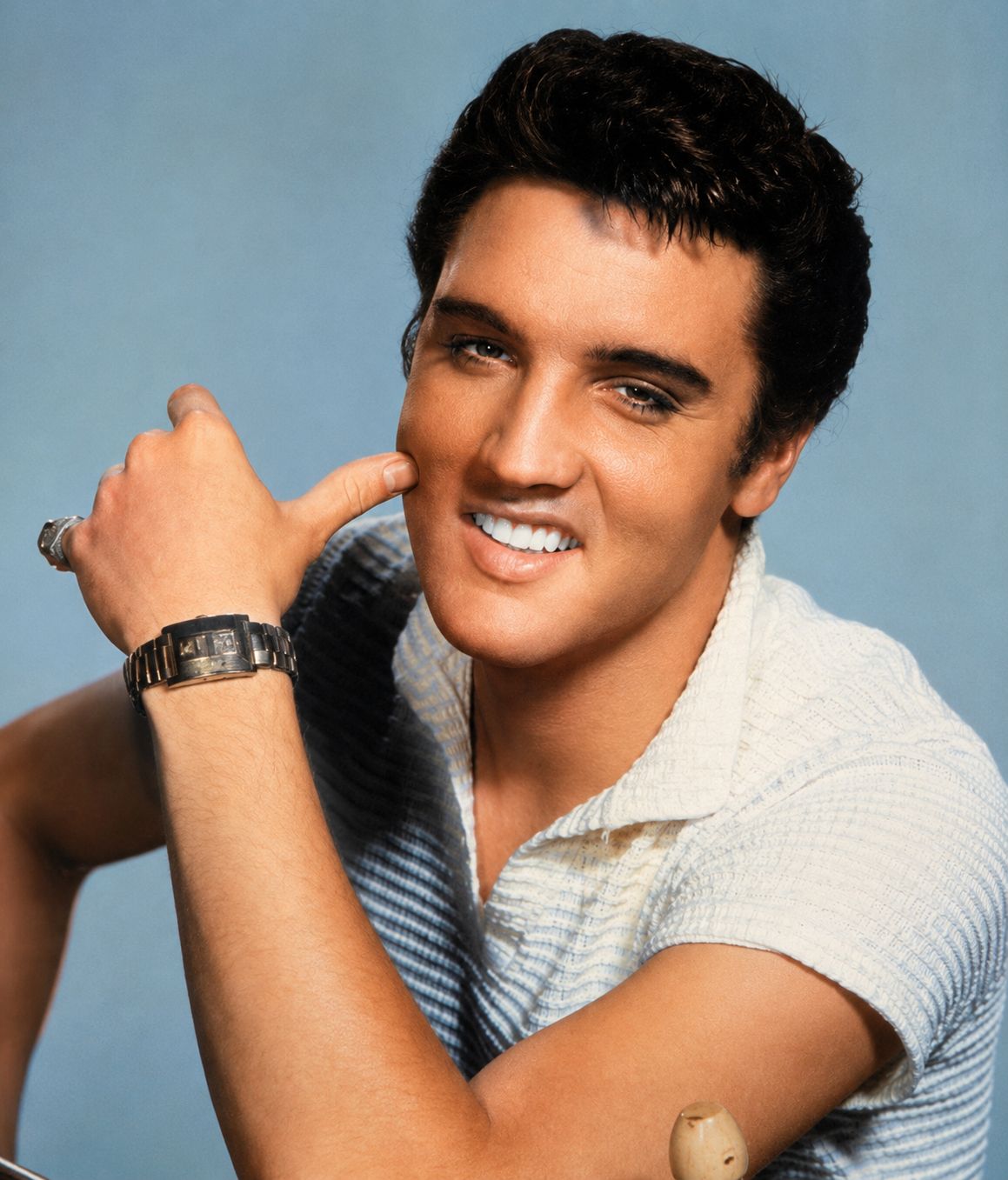
THE MAN WHO HELPED CHANGE AMERICAN MUSIC FOREVER: How Elvis Presley Redefined An Industry And Inspired Generations
Long before the world called him the King of Rock ’n’ Roll, Elvis Presley was simply a young man from Tupelo with an extraordinary voice and a dream that seemed almost impossible.
Few people could have imagined that this quiet teenager would grow into one of the most influential entertainers in modern history.
Yet Elvis did far more than become a successful recording artist.
He helped transform the sound, style, and direction of American popular music.
His influence reached beyond record sales, chart positions, and sold-out concerts.
It reshaped an entire industry.
When Elvis emerged in the mid-1950s, American music was already rich with extraordinary traditions.
Country music flourished across the South.
Gospel echoed through churches every Sunday.
Rhythm and blues was creating powerful new sounds in Black communities.
Blues carried generations of stories, struggle, and resilience.
Rather than choosing only one path, Elvis drew inspiration from all of them.
He listened.
He learned.
He absorbed their rhythms, melodies, and emotions.
Then he brought those influences together in a way that felt fresh to millions of listeners.
He did not invent rock and roll by himself, nor did he create the musical traditions that inspired him.
Instead, he became one of the artists who introduced this powerful blend of styles to an enormous mainstream audience, helping accelerate rock and roll’s rise into a cultural force.
That distinction is an important part of his legacy.
His breakthrough recording of That’s All Right at Sun Records revealed a sound unlike anything many listeners had heard on popular radio.
The performance carried the emotional honesty of gospel, the storytelling spirit of country, the rhythm of blues, and the youthful energy that would soon become closely associated with rock and roll.
Audiences responded immediately.
The excitement spread quickly across America.
Within a few short years, Elvis Presley had become the face of a musical revolution.
But his impact was never limited to the songs themselves.
He also transformed the way performers approached the stage.
Before Elvis, many popular singers stood relatively still while delivering polished performances.
Elvis brought movement, confidence, spontaneity, and unmistakable charisma.
Every appearance felt alive.
Every performance carried a sense of excitement.
His stage presence became almost as influential as his voice.
Young musicians watched carefully.
Many left believing that music could be more expressive, more personal, and more dynamic than they had ever imagined.
That inspiration reached far beyond his own generation.
Artists across rock, country, pop, soul, and countless other genres have acknowledged Elvis’s influence on their own careers.
Some admired his fearless performances.
Others studied his vocal phrasing.
Many simply recognized that he had expanded the possibilities of what popular music could become.
His legacy can still be heard today in performers who continue blending genres rather than allowing musical labels to define them.
Perhaps equally important was Elvis’s role in bringing diverse musical traditions to wider audiences.
His success encouraged millions of listeners to explore styles of music they might never have encountered otherwise.
In doing so, he helped create new conversations about American music and its rich cultural roots.
His career reflected how powerful music can become when different traditions meet with mutual respect and creativity.
Away from the spotlight, friends often remembered Elvis as someone whose love of music never faded.
He remained curious.
He continued exploring gospel, country, rhythm and blues, and contemporary songs throughout his career.
That lifelong enthusiasm kept his performances feeling genuine.
He never approached music as a formula.
He approached it as a passion.
Visitors who step inside Graceland often leave with a deeper understanding of that passion.
They see not only the costumes, gold records, and awards, but also the personal side of the artist whose extraordinary journey changed entertainment forever.
They discover a young man who never forgot where he came from, even after becoming one of the most famous performers on Earth.
Nearly fifty years after his passing, Elvis’s influence remains unmistakable.
His recordings continue reaching new audiences through streaming platforms, documentaries, films, and restored concert footage.
Young musicians still study his performances.
Classic songs continue finding new life through fresh interpretations.
His voice remains instantly recognizable across generations.
That remarkable longevity says something profound about the nature of true influence.
Great artists create memorable songs.
Extraordinary artists change the direction of music itself.
Elvis Presley belongs in that rare company.
Not because he stood alone.
Not because he created every musical idea that shaped rock and roll.
But because he helped bring together traditions, audiences, and possibilities in a way that forever altered the course of popular music.
Perhaps that is why discussions about Elvis continue nearly seventy years after his breakthrough.
His story is not simply about fame.
It is about innovation.
Courage.
Creativity.
And the willingness to embrace musical influences from many different places to create something that felt entirely new.
The applause that once greeted Elvis Presley eventually faded.
The concerts came to an end.
The spotlight moved on to new generations of performers.
Yet the sound he helped bring to the world never disappeared.
It continues in the artists he inspired.
In the music that followed.
And in every listener who discovers that remarkable voice for the very first time.
That is the true measure of his legacy.
Not merely that Elvis Presley became the King of Rock ’n’ Roll.
But that he helped transform American music in ways that continue to shape the soundtrack of the world today.