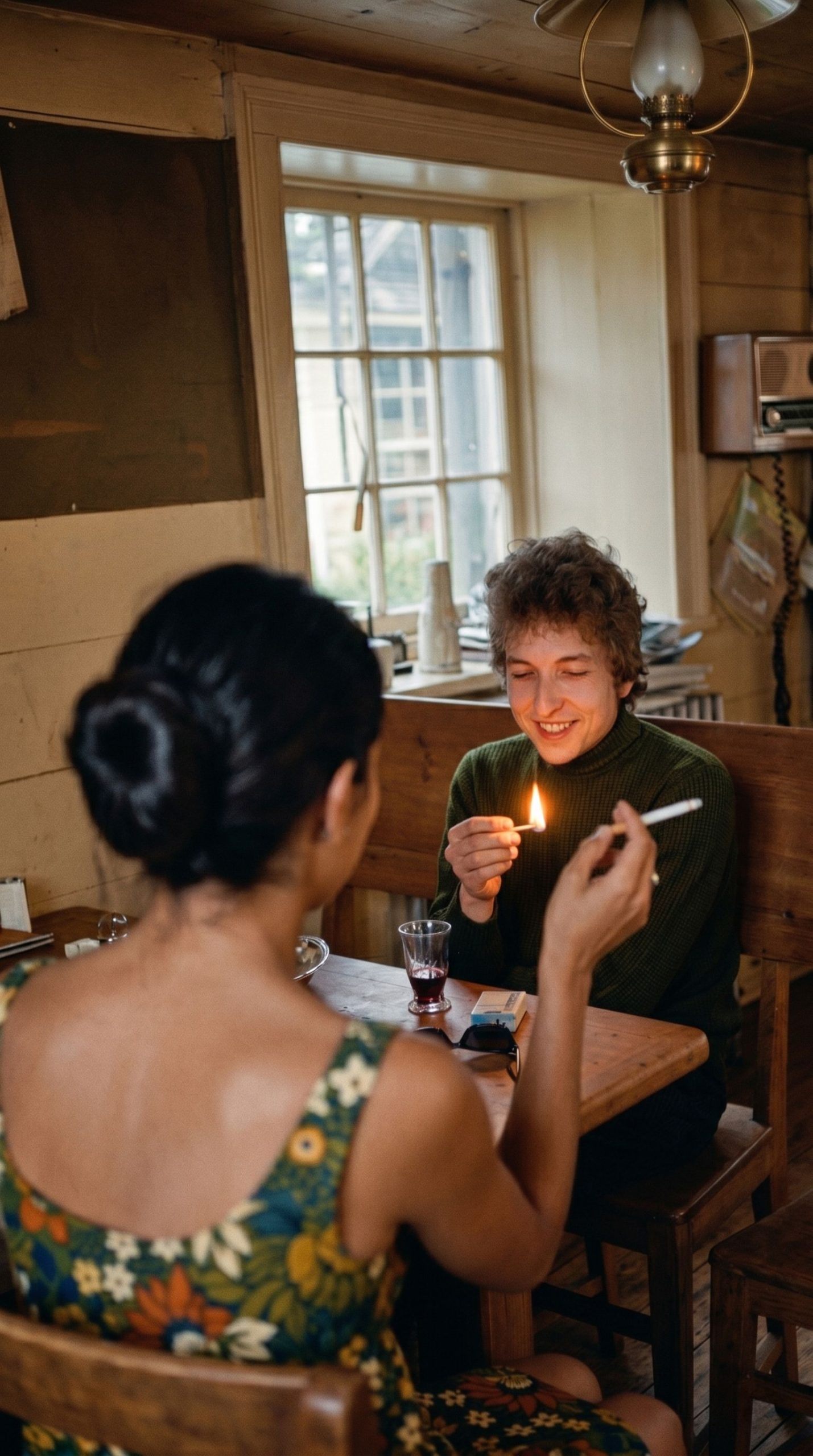
THE MAKING OF A ROCK MASTERPIECE: How Love and Theft Reinvented Bob Dylan for a New Century
More than two decades after its release, Love and Theft remains one of the most celebrated albums of Bob Dylan’s extraordinary late-career revival. Frequently ranked among the finest records of his later years, the album stunned critics and longtime fans alike, proving that Dylan was still capable of producing music as inventive, ambitious, and compelling as anything in his legendary catalog.
Yet the story behind the making of Love and Theft is every bit as fascinating as the music itself.
When Dylan entered the studio in 2001, he was already enjoying a creative resurgence sparked by the success of 1997’s Time Out of Mind. That album had silenced critics who believed his greatest work was behind him, winning multiple Grammy Awards and reestablishing him as a major artistic force.
Still, few expected what would come next.
Rather than attempting to recreate the dark, atmospheric mood of Time Out of Mind, Dylan decided to move in a completely different direction. He immersed himself in the sounds of early American music, drawing inspiration from blues, folk, country, rockabilly, jazz, swing, vaudeville, and countless other traditions that had shaped the nation’s musical identity.
The result was an album unlike anything else being released at the time.
Working under the production pseudonym “Jack Frost,” Dylan assembled a group of trusted musicians and pursued a more spontaneous recording approach. Instead of relying on elaborate studio techniques, he focused on capturing live performances that felt energetic, loose, and authentic.
That decision gave the album much of its unique character.
Songs such as “Mississippi,” “Summer Days,” “Honest With Me,” and “High Water (For Charley Patton)” sounded simultaneously old and new. Dylan wasn’t merely recreating vintage styles—he was reimagining them through his own distinctive voice and perspective.
Listeners were immediately struck by the album’s rich cast of characters.
Con artists, drifters, gamblers, dreamers, lovers, outlaws, and survivors all populated Dylan’s lyrical universe. The songs moved effortlessly between humor, heartbreak, nostalgia, and social commentary, creating a musical landscape that felt timeless.
Many critics described the album as a celebration of America’s musical heritage.
Others viewed it as something even more ambitious: a meditation on the myths, contradictions, and stories that define American culture itself.
Upon release, Love and Theft received widespread acclaim.
Reviewers praised its wit, originality, and musical confidence. Many were astonished that an artist who had already spent four decades at the top of the profession could still sound so inspired.
Some critics even argued that Dylan had achieved the rarest feat in popular music: creating a genuine masterpiece late in his career.
Yet the album’s history became inseparable from an unexpected circumstance that nobody could have predicted.
Love and Theft was released on September 11, 2001.
As Americans woke that morning, the album’s arrival was completely overshadowed by the terrorist attacks that would forever change the course of history. In the days that followed, discussions about music understandably faded into the background as the world struggled to process the enormity of the tragedy.
The coincidence was extraordinary.
An album filled with imagery of uncertainty, chaos, resilience, and American identity had arrived on one of the most consequential days in modern American history.
Although Dylan had completed the record long before the attacks occurred, many listeners later found themselves hearing the songs through a different lens because of the date on which they entered the world.
Years later, another unexpected detail sparked renewed discussion about the album.
Researchers and fans noticed that certain lines and phrases within Love and Theft closely resembled passages from Confessions of a Yakuza, a memoir by Japanese author Junichi Saga. The discovery generated considerable debate among critics and scholars.
Some accused Dylan of borrowing too heavily from existing sources.
Others argued that his approach reflected a longstanding artistic tradition of adaptation, quotation, and reinterpretation—a practice deeply rooted in folk music, literature, and blues history.
The controversy ultimately did little to diminish the album’s reputation.
If anything, it reinforced the complexity of Dylan’s creative process and renewed interest in the many influences woven throughout his work.
Today, Love and Theft is widely regarded as one of the defining achievements of Dylan’s later career. It demonstrated that artistic reinvention remained possible even after decades of success. It showed that Dylan could still surprise audiences, challenge expectations, and create music that felt both deeply rooted in tradition and unmistakably original.
Perhaps that is why the album continues to resonate more than twenty years later.
It is not simply a collection of songs.
It is the sound of an artist rediscovering the vast possibilities of American music and transforming them into something entirely his own.
And in doing so, Bob Dylan delivered a record that many fans now consider not just a late-career triumph—but one of the greatest masterpieces of his entire career.