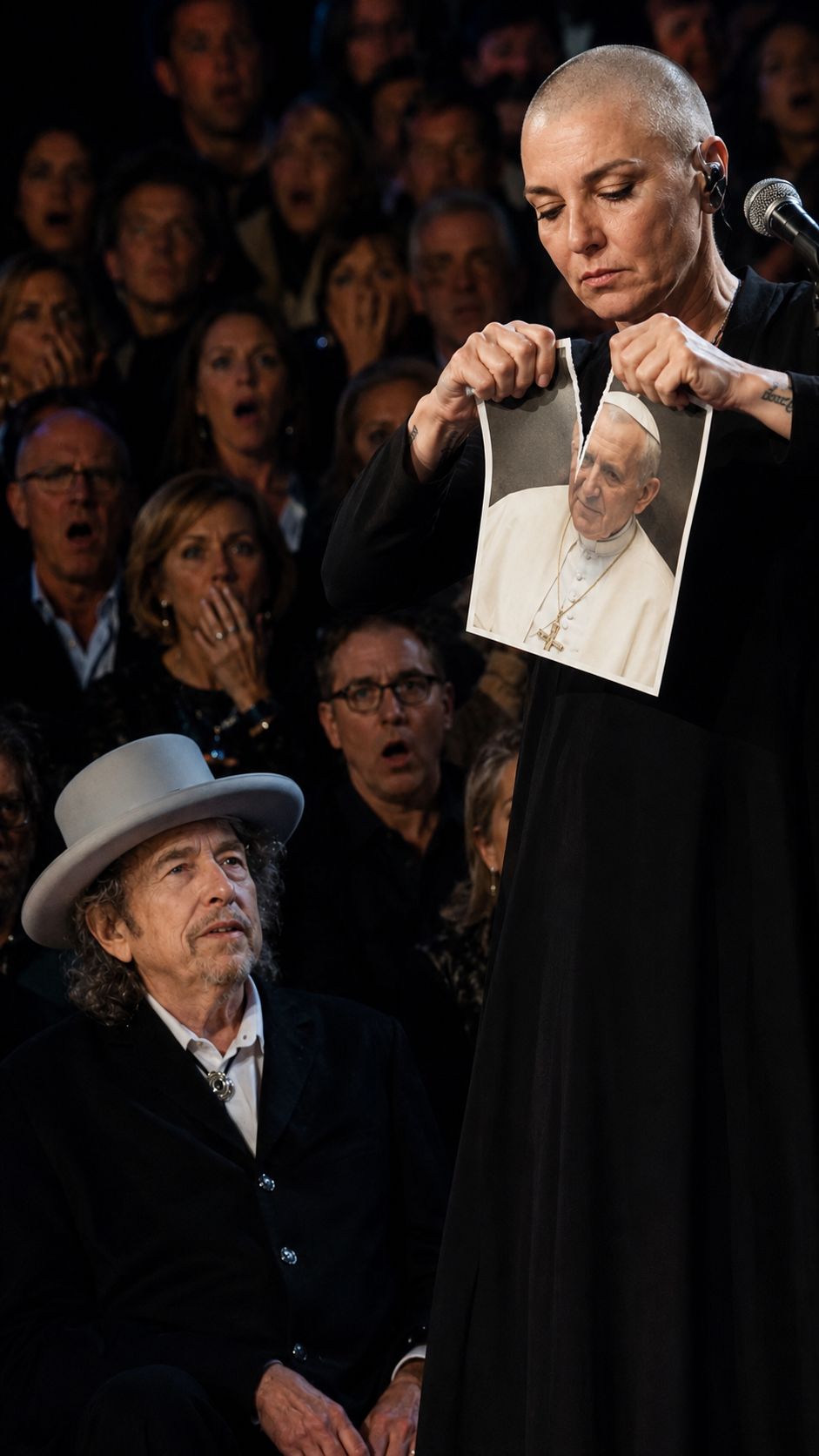
ONE OF THE MOST SHOCKING NIGHTS IN TV MUSIC HISTORY: When a Bob Dylan Tribute Became a Cultural Firestorm
On October 16, 1992, some of the biggest names in music gathered at Madison Square Garden to celebrate the 30th anniversary of Bob Dylan’s recording career.
The event, officially known as The 30th Anniversary Concert Celebration, was designed as a joyous tribute to one of the most influential songwriters in modern history. Artists including Eric Clapton, Neil Young, George Harrison, Johnny Cash, and many others came together to honor Dylan’s extraordinary legacy.
But the concert would ultimately be remembered for something very different.
Just twelve days earlier, Irish singer Sinéad O’Connor had appeared on the television program Saturday Night Live and torn up a photograph of Pope John Paul II> while protesting abuse within the Catholic Church.
The act triggered an international backlash.
At the time, many viewers, religious groups, media commentators, and public figures condemned O’Connor. Radio stations stopped playing her music, public criticism intensified, and she suddenly found herself at the center of one of the largest controversies in entertainment.
Then came the Dylan tribute concert.
Despite the uproar, O’Connor was still scheduled to appear.
When she walked onto the stage at Madison Square Garden, the reaction was immediate.
Large sections of the audience began booing loudly before she could perform her planned rendition of Dylan’s song “I Believe in You.” The hostility was so intense that the performance effectively collapsed before it could begin.
Witnesses described an atmosphere of shock and confusion.
Some audience members cheered the boos. Others appeared uncomfortable. Many of the musicians backstage reportedly watched in disbelief as the situation unfolded.
Rather than singing the Dylan song she had prepared, O’Connor stood her ground.
Visibly emotional but defiant, she instead delivered an a cappella version of Bob Marley’s protest anthem War, adapting the lyrics to reflect her own message.
The audience response remained deeply divided.
After only a few minutes, she left the stage.
What had been intended as a celebration of Dylan’s career had suddenly become one of the most unforgettable controversies ever associated with a major music event.
The incident immediately dominated headlines.
For many observers, the moment reflected broader cultural conflicts involving religion, free speech, celebrity activism, and public accountability. Others viewed it as an example of how quickly public opinion can turn against an artist during a controversy.
Years later, perspectives on the event began to change.
As revelations emerged regarding abuse scandals within parts of the Catholic Church, some commentators argued that O’Connor’s protest had been misunderstood at the time. Others maintained that her methods remained deeply offensive regardless of the issues she sought to raise.
The debate continues to this day.
What remains beyond dispute is the extraordinary impact of that night.
A concert organized to honor Bob Dylan unexpectedly became one of the most discussed moments in television and music history. Even decades later, footage of the incident continues to circulate online, generating new discussions among younger audiences discovering the story for the first time.
Ironically, Dylan himself was largely a bystander to the controversy.
Yet one of the most prestigious tributes ever organized in his honor became permanently linked to a cultural storm that extended far beyond music.
More than thirty years later, the event remains a powerful reminder of how quickly a single moment can overshadow an entire evening—and how a tribute concert intended to celebrate a musical legend became one of the most controversial nights television music history has ever witnessed.