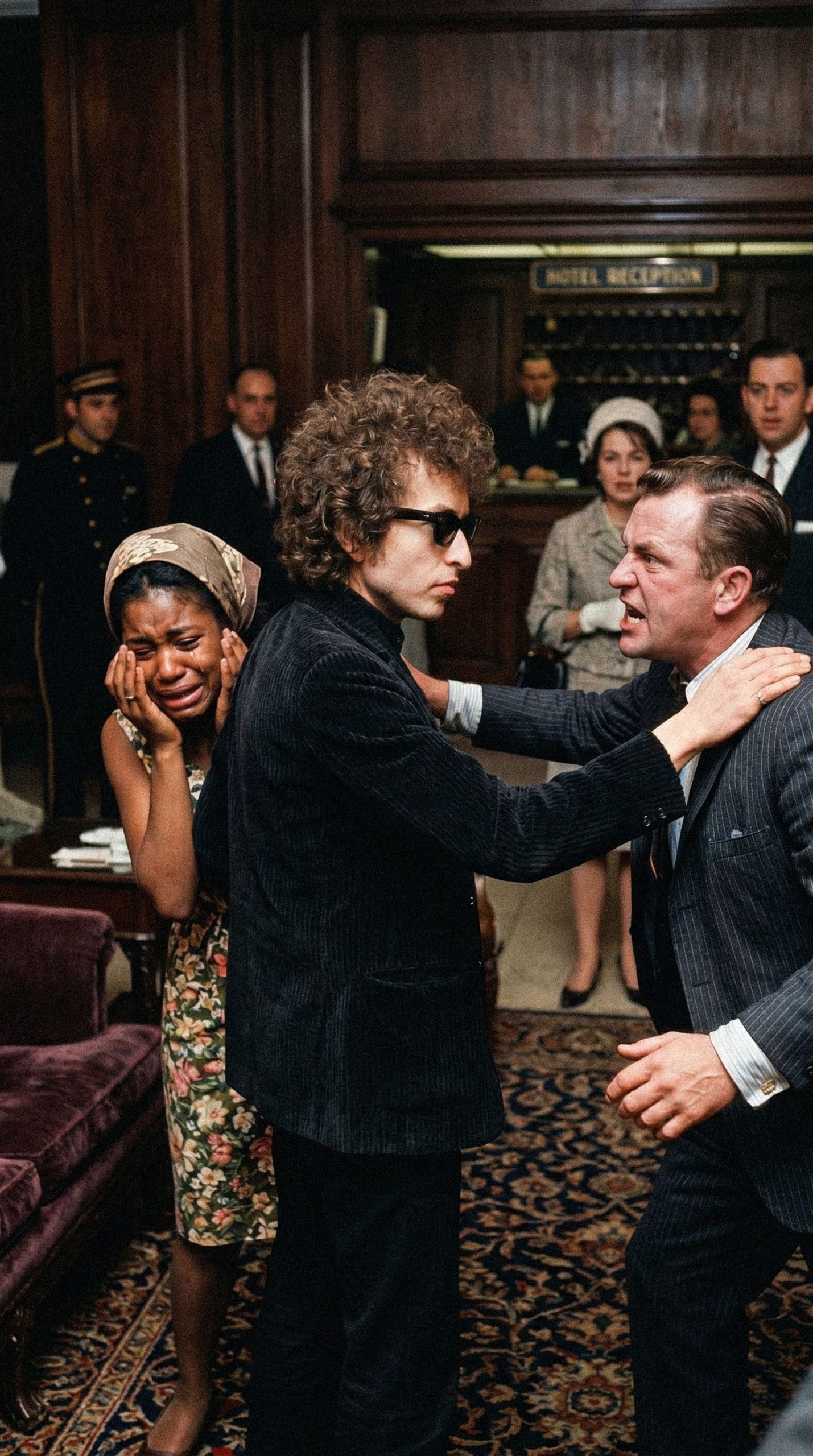
A BOB DYLAN SONG THAT STILL MAKES LISTENERS PAUSE: The True Story Behind “The Lonesome Death of Hattie Carroll”
Among the many powerful songs written by Bob Dylan, few continue to provoke reflection and debate quite like “The Lonesome Death of Hattie Carroll.”
While many listeners recognize its haunting melody and restrained storytelling, the song is rooted in a real event that exposed deep racial and social inequalities in the United States during the early 1960s.
The inspiration for the song was the death of Hattie Carroll, a 51-year-old Black barmaid who was working at a charity ball in Baltimore, Maryland, in February 1963. During the event, she was assaulted by **William Zantzinger>, a young white tobacco farmer from a wealthy family, who struck her with a cane after a brief confrontation.
Carroll collapsed later that evening and died several hours afterward.
The incident shocked many observers, but the public reaction intensified when the legal proceedings concluded. Rather than being convicted of murder or manslaughter, Zantzinger pleaded guilty to the lesser charge of assault and received a sentence of only six months in jail and a modest fine.
For many Americans, the outcome symbolized the unequal treatment that existed within the justice system, particularly when race and social status were involved.
Bob Dylan responded by writing “The Lonesome Death of Hattie Carroll,” which appeared on his 1964 album The Times They Are a-Changin’. Instead of relying on emotional outbursts, Dylan recounted the events in a measured, almost journalistic style, allowing the facts and the disparity in justice to speak for themselves.
The song’s repeated refrain urges listeners to withhold judgment until the story reaches its conclusion, making the final revelation of the sentence all the more impactful.
Over the decades, the ballad has become one of Dylan’s most celebrated examples of topical songwriting. It is frequently cited as evidence of his ability to transform contemporary events into enduring works of art that challenge audiences to think critically about justice, prejudice, and accountability.
At the same time, historians have noted that Dylan simplified or dramatized certain details for artistic purposes. While the song captures the essence of the tragedy and the public outrage it inspired, it should be understood as a musical interpretation rather than a verbatim historical account.
More than sixty years later, “The Lonesome Death of Hattie Carroll” continues to resonate because the questions it raises remain relevant. Its story is not merely about one assault or one court case—it is about the broader pursuit of fairness and the human cost when justice appears unequal.
For many listeners, that enduring message is what makes the song so unforgettable. Long after the final verse fades, it continues to encourage reflection on history, empathy, and the responsibility to confront injustice wherever it appears.