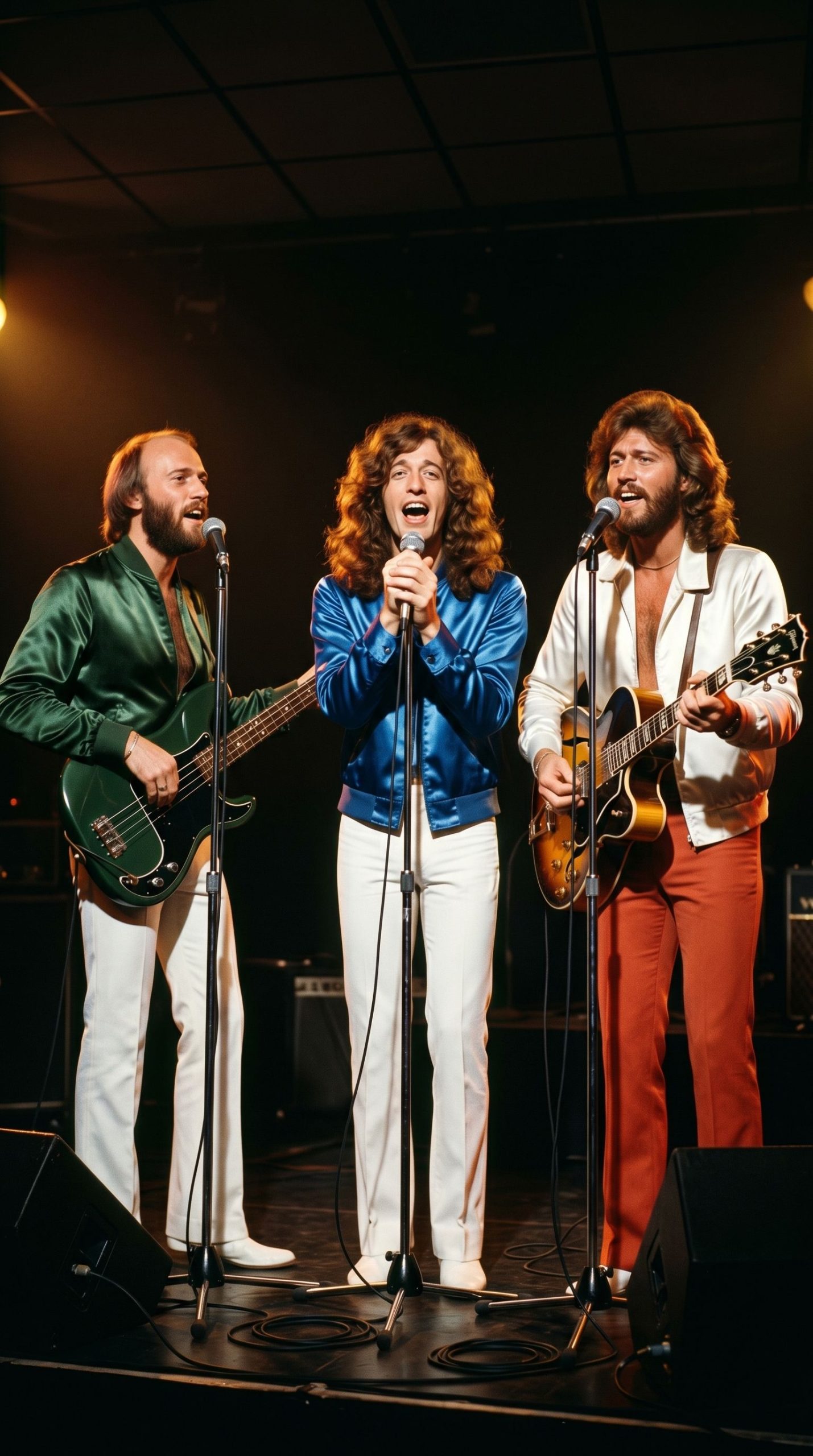
FEW PEOPLE KNOW THE BEE GEES CAME WITHIN INCHES OF COLLAPSE BEFORE BECOMING MUSIC LEGENDS: The Comeback That Changed Music History
Today, the Bee Gees are celebrated as one of the most successful and influential groups in popular music. Their timeless harmonies, unforgettable songwriting, and genre-defining hits have earned them a permanent place in entertainment history. But long before worldwide acclaim, brothers Barry Gibb, Robin Gibb, and Maurice Gibb faced setbacks that cast serious doubt on their future.
After achieving international success in the late 1960s with songs such as “Massachusetts” and “I Started a Joke,” the group encountered creative disagreements and changing musical tastes. Internal tensions eventually led to Robin Gibb leaving the band for a period in 1969, prompting many observers to question whether the Bee Gees had reached the end of the road.
At the same time, the music industry itself was evolving rapidly. New artists and styles were emerging, and maintaining commercial momentum proved increasingly difficult. Albums that failed to match earlier triumphs fueled speculation that the brothers’ best days might already be behind them.
Rather than giving up, however, the Gibb brothers chose reinvention.
Reuniting in the early 1970s, they embraced fresh musical influences and experimented with new production techniques. Their willingness to evolve culminated in the landmark 1975 album Main Course, which introduced a more soulful, rhythm-driven sound and prominently showcased Barry Gibb’s now-iconic falsetto. That creative shift laid the foundation for an extraordinary resurgence.
The transformation reached historic proportions with the soundtrack to Saturday Night Fever. Songs such as “Stayin’ Alive,” “Night Fever,” and “How Deep Is Your Love” became international sensations, helping define the disco era while simultaneously demonstrating the Bee Gees’ exceptional songwriting and vocal artistry. Their music transcended dance floors, becoming part of the cultural fabric of an entire generation.
Even after later facing an anti-disco backlash and changing public tastes, the brothers once again adapted. They continued to write and produce hit songs for themselves and for other artists, proving that their success rested on far more than a single musical trend.
What makes the Bee Gees’ story so compelling is not merely the scale of their achievements but the resilience behind them. They overcame professional uncertainty, periods of criticism, and personal challenges without abandoning the creativity and family bond that had defined them from the beginning.
Looking back, it is clear that the moments when the Bee Gees seemed closest to falling apart ultimately became turning points. Instead of ending their journey, those obstacles inspired reinvention and led to some of the most celebrated music of their careers.
Their legacy stands as a reminder that lasting greatness is rarely built on uninterrupted success. More often, it is forged through perseverance, adaptability, and the determination to keep creating even when the future appears uncertain. For the Bee Gees, those qualities transformed potential collapse into one of the most remarkable comeback stories in music history.