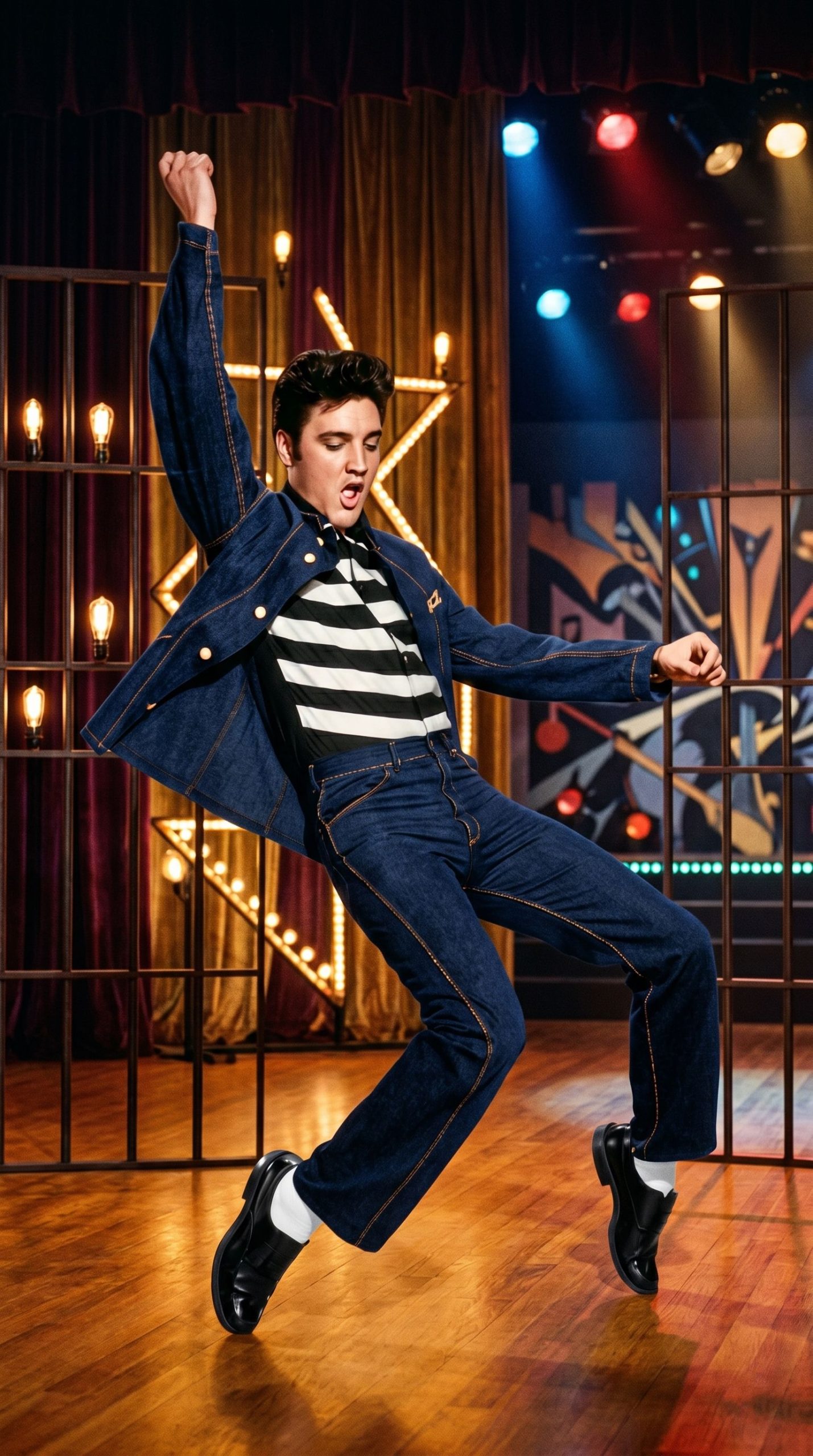
WHY ELVIS PRESLEY BECAME THE ORIGINAL POP CULTURE PHENOMENON: How the King of Rock and Roll Redefined Entertainment
When Elvis Presley burst onto the national stage in the 1950s, he was far more than a successful recording artist. His electrifying performances, magnetic charisma, and unmistakable style transformed him into one of the first truly global pop culture icons, setting a standard that generations of entertainers would aspire to follow.
One of the most talked-about aspects of Elvis’s early career was his energetic stage presence. His signature hip movements and uninhibited performance style challenged social conventions of the time, prompting criticism from some commentators and television personalities who considered them too provocative for mainstream audiences.
Ironically, that controversy only amplified his popularity.
Young fans embraced Elvis as a symbol of change and youthful expression, packing concert halls and tuning in to television appearances in record numbers. His performances injected a new level of excitement into live entertainment, proving that a singer’s physical presence on stage could be just as memorable as the music itself.
But Elvis’s impact extended well beyond choreography.
By blending influences from rhythm and blues, country, gospel, and pop, he helped bring rock and roll into the cultural mainstream. His distinctive vocal style, emotional delivery, and willingness to cross musical boundaries opened new possibilities for artists who followed.
The scale of his influence can still be seen today. Countless performers have acknowledged Elvis as an inspiration, including **Michael Jackson>, who admired the King’s ability to command an audience and create unforgettable moments on stage. While Michael Jackson developed his own groundbreaking artistic identity, many observers have noted parallels in the emphasis both artists placed on innovation, showmanship, and connecting with fans through performance.
Elvis also understood the power of image in an era before social media and the internet. His hairstyles, fashion choices, films, and television appearances became cultural events in themselves, helping establish the blueprint for the modern multimedia superstar.
Importantly, his popularity endured because it was built on substance as well as spectacle. Behind the headlines and controversy was a gifted vocalist capable of delivering tender ballads like “Can’t Help Falling in Love,” gospel standards, and high-energy rock classics with equal conviction.
More than half a century after his greatest commercial successes, Elvis Presley remains one of the most recognizable figures in entertainment history. His recordings continue to inspire new listeners, while his influence can be traced through generations of musicians, dancers, actors, and performers across virtually every genre.
In the end, Elvis became the original pop culture phenomenon not simply because he shocked audiences, but because he changed expectations of what a performer could be. He demonstrated that music, personality, style, and stagecraft could combine to create an experience that transcended the songs themselves—an approach that continues to shape popular entertainment around the world.