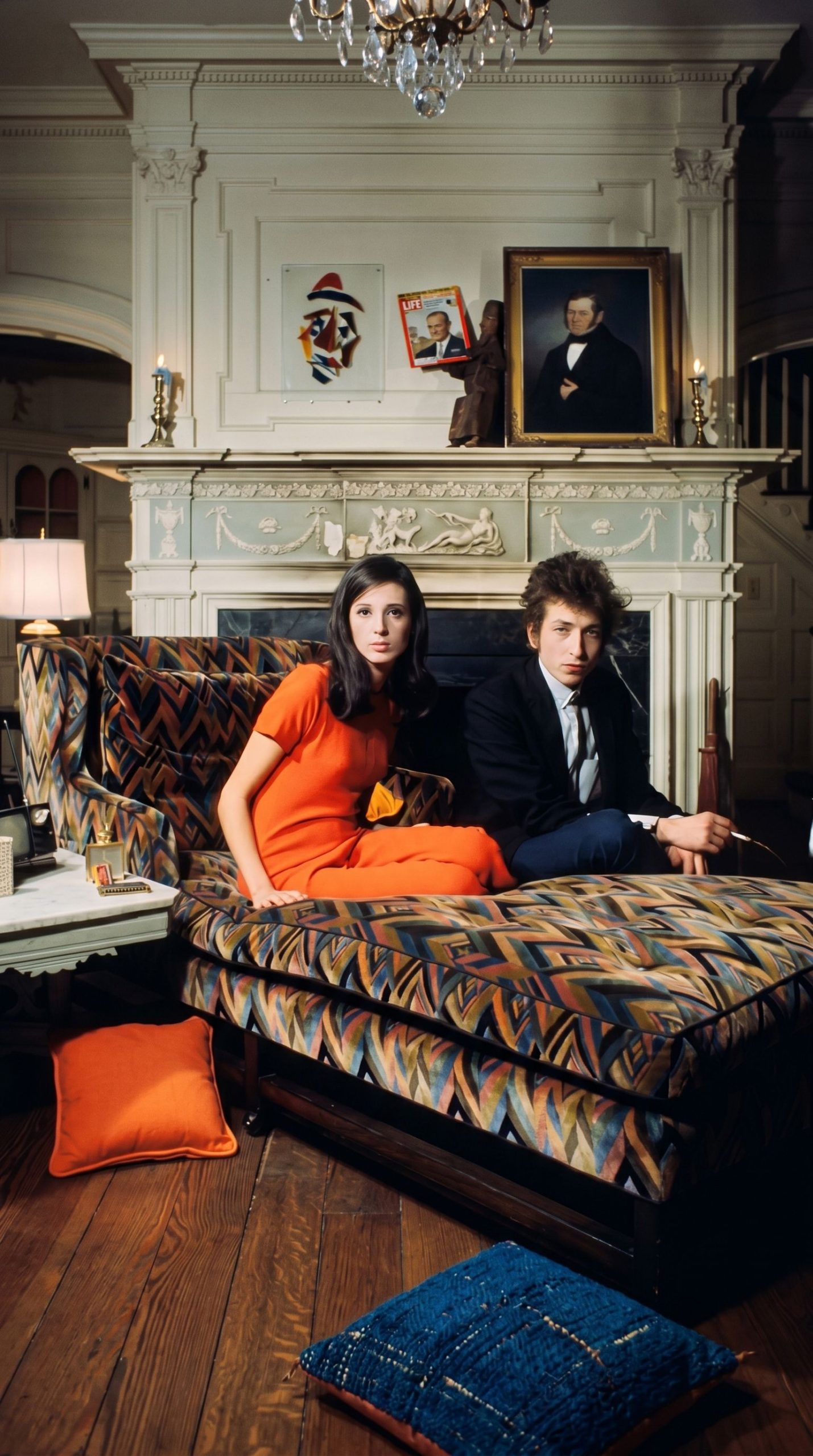
SHOCKING MUSIC HISTORY: The Album That Changed Bob Dylan—and Popular Music—Forever
When Bob Dylan released Bringing It All Back Home in March 1965, few people realized they were witnessing one of the most important turning points in music history.
At the time, Dylan was already regarded as a leading figure in the folk movement. Songs such as Blowin’ in the Wind and The Times They Are A-Changin’ had established him as a powerful songwriter whose work captured the hopes, frustrations, and idealism of a generation.
But Dylan was growing restless.
He had little interest in repeating himself, and he increasingly resisted the labels that critics and fans were trying to place upon him. Rather than remain confined to traditional folk music, he wanted to explore new sounds, new ideas, and new possibilities.
The result was Bringing It All Back Home.
The album immediately surprised listeners.
One side featured electric instruments and a full backing band, while the other remained rooted in the acoustic style that had made Dylan famous. The combination created a bridge between two worlds and signaled the beginning of a dramatic transformation—not only for Dylan, but for popular music itself.
For many fans, the change was thrilling.
For others, it felt like betrayal.
The controversy surrounding Dylan’s move toward electric music would explode later that year at the Newport Folk Festival, but the seeds of that conflict were already present on Bringing It All Back Home.
The album challenged expectations from its very first moments.
Songs such as Subterranean Homesick Blues introduced a rapid-fire lyrical style unlike anything audiences had heard before. Filled with surreal imagery, cultural references, and sharp observations, the song sounded radically different from the traditional folk music dominating Dylan’s earlier work.
Many historians now consider it a precursor to modern rap and spoken-word styles.
Elsewhere on the album, Dylan pushed songwriting into entirely new territory.
Tracks such as Mr. Tambourine Man demonstrated an unprecedented level of poetic ambition. Rather than delivering straightforward narratives, Dylan filled his lyrics with dreamlike imagery, symbolism, and emotional ambiguity that invited endless interpretation.
The effect was revolutionary.
Before Dylan, popular music lyrics were often expected to be simple, direct, and easily understood. After Bringing It All Back Home, artists increasingly realized that songs could be literary, mysterious, and intellectually challenging while still connecting with mass audiences.
The album’s influence spread rapidly.
Members of The Beatles, The Byrds, and countless other musicians were inspired by Dylan’s willingness to expand the boundaries of songwriting. The record helped accelerate the creative explosion that would define the second half of the 1960s.
What makes the album especially remarkable is how modern it still feels.
Decades later, listeners continue discovering new layers of meaning within its songs. Critics regularly rank it among the greatest albums ever recorded, and many musicians cite it as a life-changing influence on their own artistic development.
For Dylan himself, the album marked the beginning of one of the most extraordinary creative streaks in music history.
It was followed by Highway 61 Revisited and Blonde on Blonde, forming a trilogy of groundbreaking records that permanently altered the landscape of popular music.
Yet many fans continue to view Bringing It All Back Home as the moment everything changed.
It was the album where Dylan stopped following expectations and began creating an entirely new path.
It challenged audiences.
It divided fans.
It inspired generations of artists.
And more than sixty years later, musicians, critics, and listeners are still exploring the hidden genius behind the songs that transformed modern music forever.
Not many albums can claim to have changed the direction of popular culture.
Bringing It All Back Home is one of the rare exceptions.