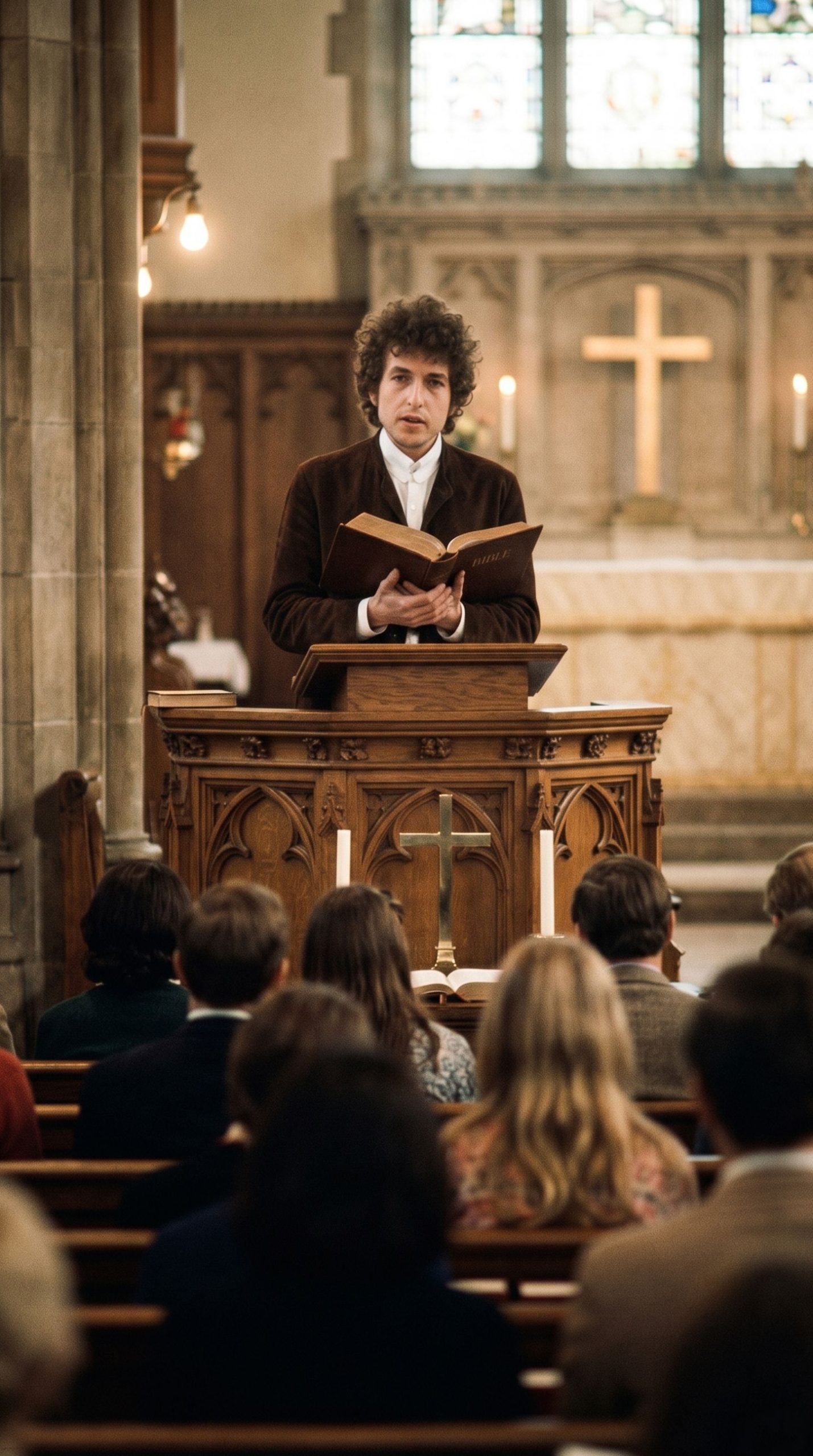
“WHEN BOB DYLAN SHOCKED THE WORLD WITH HIS FAITH” — The Spiritual Transformation That Nearly Changed His Legacy Forever
At the height of his legendary career, when the world already viewed Bob Dylan as one of the greatest songwriters in modern history, the mysterious musician made a decision that stunned fans, critics, and even many of his closest supporters.
He publicly embraced Christianity.
For audiences who had spent years treating Dylan as a poetic cultural rebel, political symbol, and elusive artistic genius, the transformation felt almost unbelievable. The man whose songs once fueled protest movements and countercultural identity suddenly began speaking openly about faith in Jesus Christ, performing gospel-inspired music, and releasing albums filled with spiritual conviction.
The reaction across America was explosive.
Some listeners felt inspired by what they viewed as a deeply sincere personal awakening. Others believed Dylan had abandoned the artistic image and emotional complexity that made him legendary in the first place. Critics openly questioned whether the iconic songwriter was destroying his own career at the peak of his influence.
And perhaps most shocking of all:
Bob Dylan appeared willing to risk everything for it.
The transformation began during the late 1970s, a turbulent period in Dylan’s personal and artistic life. According to accounts connected to the singer at the time, Dylan had been emotionally exhausted and spiritually restless following years of fame, creative pressure, relationship struggles, and emotional isolation. After decades spent carrying the burden of public mythology, he reportedly became increasingly drawn toward spiritual questions involving meaning, identity, redemption, and faith.
Then came the moment that changed everything.
During this period, Dylan became involved with Christian influences and Bible study experiences that reportedly affected him profoundly. Soon afterward, he began openly discussing his belief in Jesus Christ and dramatically shifted the direction of his music.
For fans, the change felt sudden and almost surreal.
The legendary songwriter who once avoided clear explanations about nearly everything now appeared passionately committed to sharing spiritual conviction through his songs and performances. Albums like Slow Train Coming, Saved, and Shot of Love marked one of the most controversial artistic transformations of his entire career.
Concert audiences were stunned.
Instead of performing endless collections of older classics, Dylan frequently focused heavily on his new spiritual material. Some fans reportedly grew frustrated when beloved protest songs or earlier hits disappeared from performances entirely. Critics accused him of becoming preachy, obsessive, or disconnected from the audience that helped build his legendary status.
The backlash became intense.
Portions of the music press reacted harshly, treating Dylan’s spiritual transformation almost like betrayal. People who once celebrated his artistic fearlessness suddenly mocked or questioned him openly. Some listeners simply could not reconcile the rebellious folk-rock icon of the 1960s with the spiritually devoted performer now singing passionately about salvation, redemption, and biblical imagery.
Yet despite the criticism, Dylan refused to retreat immediately.
That stubborn commitment deeply impressed many supporters.
Because whether audiences agreed with his beliefs or not, fans recognized something undeniably courageous about the transformation. Bob Dylan had already achieved enormous fame, cultural influence, and artistic respect. He could easily have continued repeating the style that made him universally admired.
Instead, he risked alienating large portions of his audience by publicly following a deeply personal spiritual path.
For some observers, that decision revealed one of the bravest moments of his career.
Others viewed it as deeply misunderstood.
Looking back now, many fans believe Dylan’s spiritual era exposed a side of him the public rarely saw elsewhere — emotionally vulnerable, searching, uncertain, and openly wrestling with existential questions larger than fame itself. Behind the mysterious public image stood a man reportedly struggling to find meaning beyond celebrity, artistic pressure, and cultural mythology.
His music during that period reflected those struggles intensely.
Themes of judgment, hope, morality, temptation, grace, and spiritual longing appeared throughout the lyrics. Even listeners who disagreed with Dylan’s religious direction often admitted the emotional sincerity behind the work felt impossible to ignore.
Over time, the sharp divisions surrounding the era softened somewhat.
Modern critics increasingly reevaluated Dylan’s gospel years as an important artistic chapter rather than simply a strange detour. Songs once dismissed by portions of the public gained greater appreciation for their emotional intensity and raw conviction. Some supporters now argue the period revealed extraordinary artistic honesty because Dylan followed his beliefs publicly despite knowing the backlash would likely damage his reputation.
And perhaps the most emotional part of the story came later, when Dylan reflected indirectly on the spiritual emptiness he had experienced before the transformation.
Though always elusive in interviews, he occasionally hinted that fame, success, and cultural influence alone had never fully answered the deeper questions haunting him internally. For many fans, those reflections changed how they viewed the entire spiritual journey.
It no longer seemed merely controversial.
It seemed human.
Because behind the legendary albums, Nobel Prize recognition, sold-out concerts, and global fame stood a person searching for purpose, peace, and emotional truth just like anyone else.
That realization continues dividing and fascinating audiences decades later.
Some still believe Dylan’s spiritual transformation damaged his career at a critical moment.
Others see it as one of the boldest acts of artistic honesty ever attempted by a major musician.
But perhaps the reason the story still resonates so deeply today is because it revealed something profoundly rare in celebrity culture:
At the height of worldwide fame, Bob Dylan appeared willing to risk admiration, reputation, and commercial success in order to publicly follow what he believed was spiritually true.
And whether people agreed with that path or not, many fans now believe that courage may have revealed the most vulnerable and authentic side of Bob Dylan the world had ever seen.