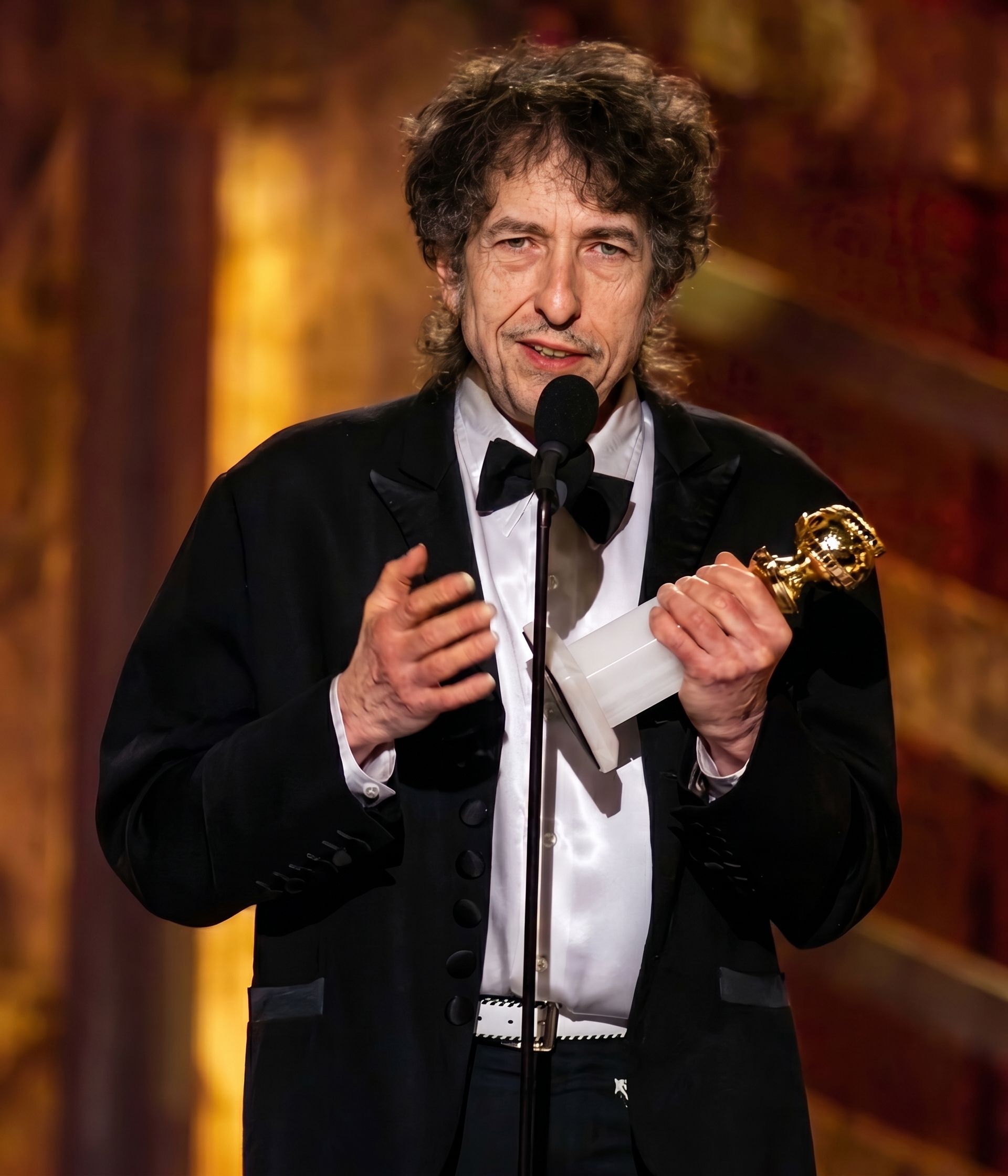
“THEY MOCKED HIS VOICE… THEN UNIVERSITIES CALLED HIM A GENIUS” — Bob Dylan’s Silent Revenge Against Critics Still Echoes Today
For much of his career, Bob Dylan faced relentless criticism from people who insisted he could never truly belong among the great artistic figures of modern history. Long before the world celebrated him as a cultural icon, critics openly attacked his rough singing voice, unconventional delivery, cryptic lyrics, and refusal to follow traditional musical expectations.
Some dismissed him as untalented.
Others claimed he could not properly sing at all.
And for decades, debates surrounding Bob Dylan seemed endless.
Was he truly a musical genius — or simply a strange cultural phenomenon surrounded by exaggerated praise?
Yet while critics argued publicly, Dylan himself responded in a way that would eventually become one of the most powerful forms of artistic revenge imaginable:
He said almost nothing.
Instead of fighting every attack or desperately defending his reputation in interviews, Dylan largely allowed time, music, and history itself to answer on his behalf. And quietly, far away from the noise of public criticism, something extraordinary began happening behind the scenes.
The very institutions traditionally associated with literature, academia, and intellectual achievement slowly started recognizing Dylan not merely as an entertainer — but as a transformative artistic force who had permanently changed modern culture.
One of the earliest major moments came in 1970, when Princeton University awarded Dylan an honorary degree. At the time, the decision shocked many observers. Universities had long celebrated classical composers, novelists, philosophers, and political thinkers — but honoring a young rock and folk musician still seemed highly unusual to portions of the academic world.
Especially this musician.
Bob Dylan was not polished, traditionally elegant, or easy to categorize. His voice remained divisive. His public personality seemed unpredictable and distant. His lyrics often sounded fragmented, surreal, emotional, and rebellious. To conservative critics, the idea that universities might treat him as a serious artistic figure appeared almost absurd.
But others already understood something historic was happening.
Professors, writers, musicians, and scholars increasingly recognized that Dylan had transformed songwriting itself into a form of modern poetry capable of carrying emotional, political, philosophical, and literary depth far beyond ordinary popular music. His songs became deeply connected to social movements, generational identity, and the emotional language of an era marked by political unrest and cultural revolution.
And while critics continued mocking his voice, universities quietly continued honoring his mind.
Decades later, another major recognition arrived when University of St Andrews awarded Dylan an honorary doctorate in music in 2004. By then, the world had changed dramatically from the hostile debates surrounding his early career. What once seemed controversial increasingly appeared undeniable: Bob Dylan’s influence on language, songwriting, literature, and global music culture had become enormous.
Fans revisiting these moments today often describe them as Dylan’s ultimate “silent revenge.”
Not revenge through anger.
Not revenge through public arguments.
But revenge through endurance, influence, and history itself slowly proving his critics wrong.
Because while people spent years attacking the way Dylan sounded, generations of listeners, writers, and artists absorbed the emotional and intellectual power hidden inside his work. Songs like “Blowin’ in the Wind,” “Like a Rolling Stone,” and “The Times They Are A-Changin’” eventually transcended music entirely, becoming part of modern cultural language itself.
And the recognition did not stop there.
Over time, Dylan accumulated honors once considered unimaginable for a rock musician. Literary institutions praised his songwriting. Governments awarded him major cultural distinctions. Historians analyzed his lyrics in classrooms and books. Universities taught courses dedicated entirely to his work and influence.
Then came the moment that shocked even many longtime supporters.
In 2016, Dylan received the Nobel Prize in Literature, becoming the first songwriter in history to win one of the world’s most prestigious literary honors. The announcement reignited old debates immediately. Critics once again questioned whether song lyrics truly belonged beside traditional literature.
But for many fans, the Nobel Prize simply confirmed what Dylan’s supporters had believed for decades:
The world had finally caught up to him.
Looking back now, the irony surrounding his career feels almost poetic. The same unusual voice once mocked by critics eventually carried words studied by scholars, quoted by political leaders, and honored by elite academic institutions around the world.
And perhaps the most remarkable part of the story remains Dylan’s reaction throughout it all.
He rarely celebrated publicly.
Rarely defended himself aggressively.
Rarely chased approval.
Instead, he simply kept writing, recording, touring, and allowing the work itself to slowly reshape public perception over time.
That silence became powerful.
Because while critics argued about whether Bob Dylan deserved to be called a genius, history quietly moved in only one direction.
Toward him.
And somewhere between the angry reviews, the honorary degrees, the literary recognition, and the Nobel Prize itself, one truth became impossible to deny:
Bob Dylan never needed to win arguments against his critics.
He simply outlived them artistically.